Two matchas can carry the same word on the label, photograph the same shade of green… and have absolutely nothing in common in the bowl. The first is silky and faintly sweet, with an umami finish that pulls you straight into a second sip. The second is dull, chalky, aggressively bitter — and leaves you quietly convinced that matcha, frankly, isn't for you.
That gap has nothing to do with luck, or with your whisking technique. It comes down to the quality of the powder, and quality is readable — once you know where to look. Here's what “ceremonial” and “culinary” actually mean, the seven markers that separate an exceptional powder from a forgettable one, and a three-step kitchen test for judging any matcha — including the tin already sitting in your cupboard.
Ceremonial grade, culinary grade: what the words mean (and what they don't)
Start with the part nobody mentions: matcha “grades” are not an official certification. No Japanese body stamps a pouch “ceremonial grade”. They are working conventions, widely used across the trade, but any brand can print them on a packet without answering to anyone. Which is precisely why it pays to check for yourself.
Ceremonial matcha
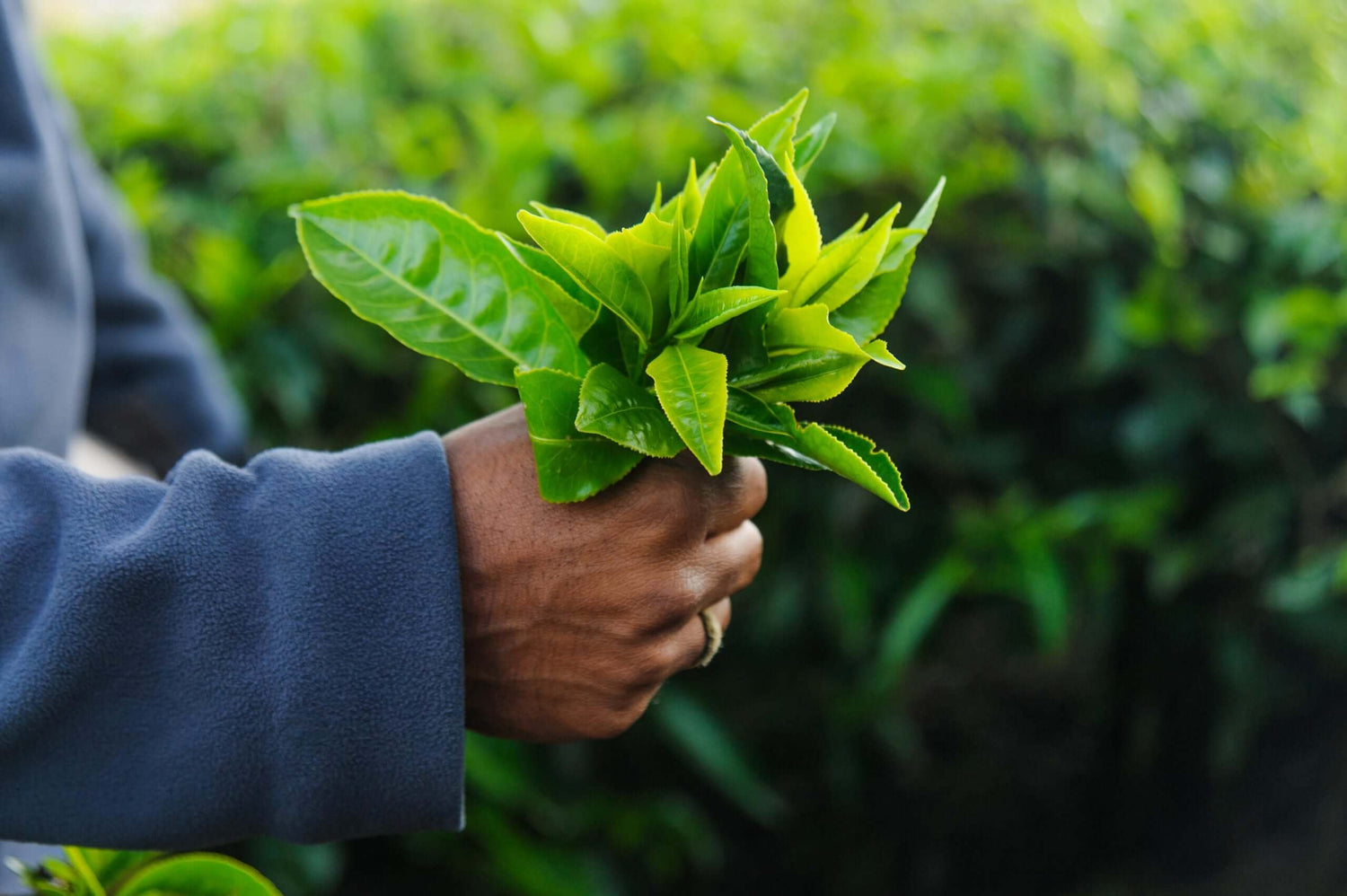
It comes from the first spring harvest (ichibancha), from young leaves shaded for three to four weeks before picking. Deprived of sunlight, the plant produces more chlorophyll and L-theanine, and far fewer bitter catechins. The veins and stems are then stripped away so that only the heart of the leaf remains, and that is ground slowly on a granite stone mill. The result: an exceptionally fine, jade-green powder, built to be drunk with water alone — no milk, no sugar to rescue it.
Culinary matcha
Picked later in the season, from more mature leaves that have seen far more sun. It is more astringent, more vegetal, sometimes frankly bitter. That isn't a flaw — it is exactly the job. In a cookie, an icing or an ice cream, an expensive ceremonial matcha would simply be swallowed whole by the sugar and the fat. Culinary matcha pushes back. Each powder has its own ground to hold.
And what about “premium”, “latte grade”, “daily”?
Pure marketing vocabulary, usually covering a middle ground: too bitter to drink neat, too expensive to bake with. They guarantee nothing on their own. Trust what you see, smell and taste — not the adjective.
The 7 markers of a quality matcha
1. Colour — the most reliable signal of all
Good matcha is a vivid, almost electric jade green. A dull, olive, khaki or yellowing powder betrays mature leaves, advanced oxidation, or stock that has been sitting far too long. It is the hardest marker to fake, and the fastest to check.
2. A named origin
The historic regions are Uji (Kyoto), Nishio (Aichi), Yame (Fukuoka), Kagoshima and Shizuoka. A serious brand names its region, sometimes its grower. A label that settles for a vague “origin: Asia” has already told you everything you need to know.
3. The harvest
Look for ichibancha (first harvest). Second and third harvests give coarser, more bitter powders — perfectly honest in baking, but with no business in a bowl of usucha.
4. The grind
A granite stone mill produces roughly 30 to 40 grams of powder an hour — a snail's pace that keeps the leaf from heating up. Industrial grinders are vastly faster, but the heat degrades the aromatics. A properly milled powder reaches 5 to 10 microns: that fineness is what lets it stay suspended in water instead of sinking.
5. The aroma, the moment you open it
Good matcha smells of freshly cut grass and nori seaweed, with a soft, almost milky sweetness underneath. A whiff of dry hay, dust or cardboard — or worse, no smell at all — is a disappointment announcing itself.
6. The texture
Take a pinch and rub it between thumb and forefinger. A quality powder feels like talc: it melts and leaves a coloured veil on the skin. If you can feel grains, the grind is too coarse — and you will get lumps, whatever you do about it.
7. Price, that uncomfortable tell
Extended shading, hand-picking, sorting, slow milling: a genuine ichibancha ceremonial rarely drops below roughly £1 per gram. Below about 40p a gram, you are buying culinary grade — which is entirely legitimate if it is heading for a sweetened latte or a cake. The problem is never the low price. It's the promise that doesn't match it.
The three-step kitchen test
Already own a matcha and want to know what it's worth? Three minutes will do it.
Step 1 — The white paper test
Tip a little powder onto a sheet of white paper and spread it with the back of a spoon. Good matcha leaves a bright, perfectly even jade streak. If the line looks dull, or speckled with lighter and darker flecks, the powder is inconsistent: mixed leaves, stems ground in with the rest.
Step 2 — The cold water test
Drop half a teaspoon into a glass of cold water and stir briefly. A fine powder disperses, colours the water properly, and hangs in suspension for a moment before settling. A coarse powder clumps and drops straight to the bottom.
Step 3 — The plain usucha test
This is the one that settles it, and it doesn't negotiate: prepare the matcha with water, no milk, no sugar. If you can't drink it neat without wincing, it is not ceremonial grade — whatever the label claims. A great matcha is soft, vegetal, gently sweet on the finish. Bitterness, where it exists at all, should be a note — never the headline.
Which matcha for which job?
- Drinking it neat (usucha, koicha): ceremonial ichibancha, no compromise available. It's the only context where the powder has nowhere to hide. Our Pure Matcha Ceremony is built for exactly this.
- The everyday matcha latte: a good ceremonial is still ideal, because milk rounds bitterness off — it doesn't erase it. Start with a harsh powder and you'll finish with a harsh latte. Our Pure Matcha Vanilla adds extra roundness to milky versions. For the technique, it's all in our homemade matcha latte recipe.
- Baking, ice cream, ice lollies: culinary grade, unapologetically. Sugar and fat need an opponent their own size — which is exactly what we reach for in our matcha and ube ice lollies.
- Iced drinks and shaken lattes: an entry-level ceremonial does the job nicely, since cold naturally dampens the perception of bitterness. Our iced latte recipes run through several versions.
Still torn between the green and the purple? Our comparison, Ube vs Matcha: which latte should you choose?, settles the argument, and the full range lives in our Matcha & Ube collection.
The preparation that reveals a good matcha: usucha with a chasen
An excellent matcha, badly made, still gives you a mediocre drink. Here is the right gesture — the one that lets the powder speak.
What you need
- 2 g ceremonial matcha (about 2 scoops of a chashaku)
- 70 ml water at 70–80 °C — never boiling
- A chasen (bamboo whisk), ideally 80 prongs
- A wide bowl and a small sieve
The steps
- Sift the 2 g of matcha straight into the bowl. This step looks skippable. It isn't. Matcha clumps naturally in humid air, and no whisk on earth rescues a lump that formed before the water arrived.
- Heat the water to 70–80 °C. Any hotter and the catechins are released all at once, and bitterness flattens everything else. No thermometer? Boil, then let it stand off the heat for two minutes.
- Pour in a third of the water and work the powder into a smooth paste against the bottom of the bowl, chasen held flat.
- Add the rest of the water and whisk briskly in a W motion, wrist loose, for 15 to 20 seconds. Don't stir in circles: you'll just move the liquid around without folding any air into it.
- Finish at the surface with one slow circular sweep to burst the larger bubbles. A good foam is dense and creamy, the colour of river moss.
- Drink it immediately: matcha starts settling within two minutes.
No chasen to hand? An electric frother, or simply a jar shaken hard, will get you through respectably — our five ways to froth a latte without a machine cover the alternatives. The chasen still wins, though, because its fine prongs fold in air without ever bullying the powder. You'll find it, alongside the chashaku, in our accessories section.
Three mistakes that ruin a good matcha
Boiling water
By far the first cause of bitterness — and the most common. At 100 °C, even an exceptional matcha turns undrinkable. Two minutes of patience change everything.
Light and air
Matcha oxidises quickly: first it loses its colour, then its aroma. Always reseal the pouch, pressing the air out, or decant into an airtight opaque tin. A clear glass jar sitting out on the worktop is the single worst place imaginable.
Heat and humidity
Avoid the cupboard above the hob. The fridge is only a good idea if the container is genuinely airtight: otherwise the condensation that forms as it comes back to room temperature will do more damage than the warmth ever would. Somewhere cool, dry and dark — and drink it within four to eight weeks of opening. That's all your powder is asking for.
Frequently asked questions
Can you make a latte with ceremonial matcha?
Absolutely, and it's what we'd recommend. Milk softens bitterness, but it doesn't remove it: a harsh powder will still make itself heard under the milk. Just use a little less of it (1 to 1.5 g) than you would for usucha.
Is ceremonial matcha healthier?
It is generally richer in L-theanine and chlorophyll, thanks to the extended shading and the youth of the leaves. Culinary matcha, with far more sun exposure, carries more catechins — hence the bitterness. Both remain whole green teas, consumed leaf and all: the nutritional case holds either way.
How do I know if my matcha has gone off?
Colour talks first: a green drifting towards khaki or yellow signals oxidation. Aroma confirms it: if it smells of nothing, or of hay, the powder has had its day. It isn't dangerous — it simply no longer deserves your 75 °C water. Retire it to a cake.
Do I really need a chasen?
For plain usucha, yes: nothing matches those eighty bamboo prongs for emulsifying without bruising. For a latte, an electric frother does the job perfectly well. Always rinse the chasen in clear water, never soap, and let it air-dry on its stand.
Why is my matcha always bitter?
In order of likelihood: water too hot, culinary-grade powder sold as ceremonial, too heavy a dose, or an oxidised matcha. Run the three tests above — they'll find the culprit in minutes.
In short
A good matcha can't be guessed from a label: you see it in the colour, smell it as the pouch opens, feel it between your fingertips, and confirm it in the bowl, with nothing but water. A handful of reflexes, and you'll steer clear of disappointing powders for good — and you may well rediscover a tea you were sure you didn't like.