Purple vs green, sweetness vs umami, zero caffeine vs green energy: ube and matcha are the two stars of colorful lattes. But which one is right for you? Here’s the complete comparison — taste, benefits, caffeine — to help you choose with confidence (or go for both).
They’re often set against each other, nicknamed “the new colorful coffees,” yet ube and matcha have almost nothing in common beyond their success. Here’s a point-by-point breakdown.
Origins: a yam vs a leaf
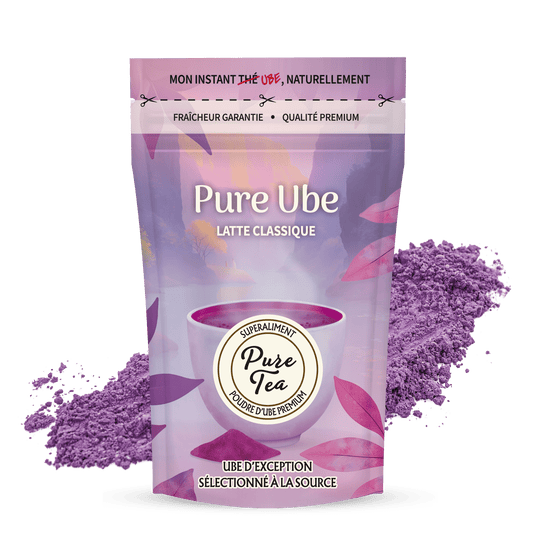
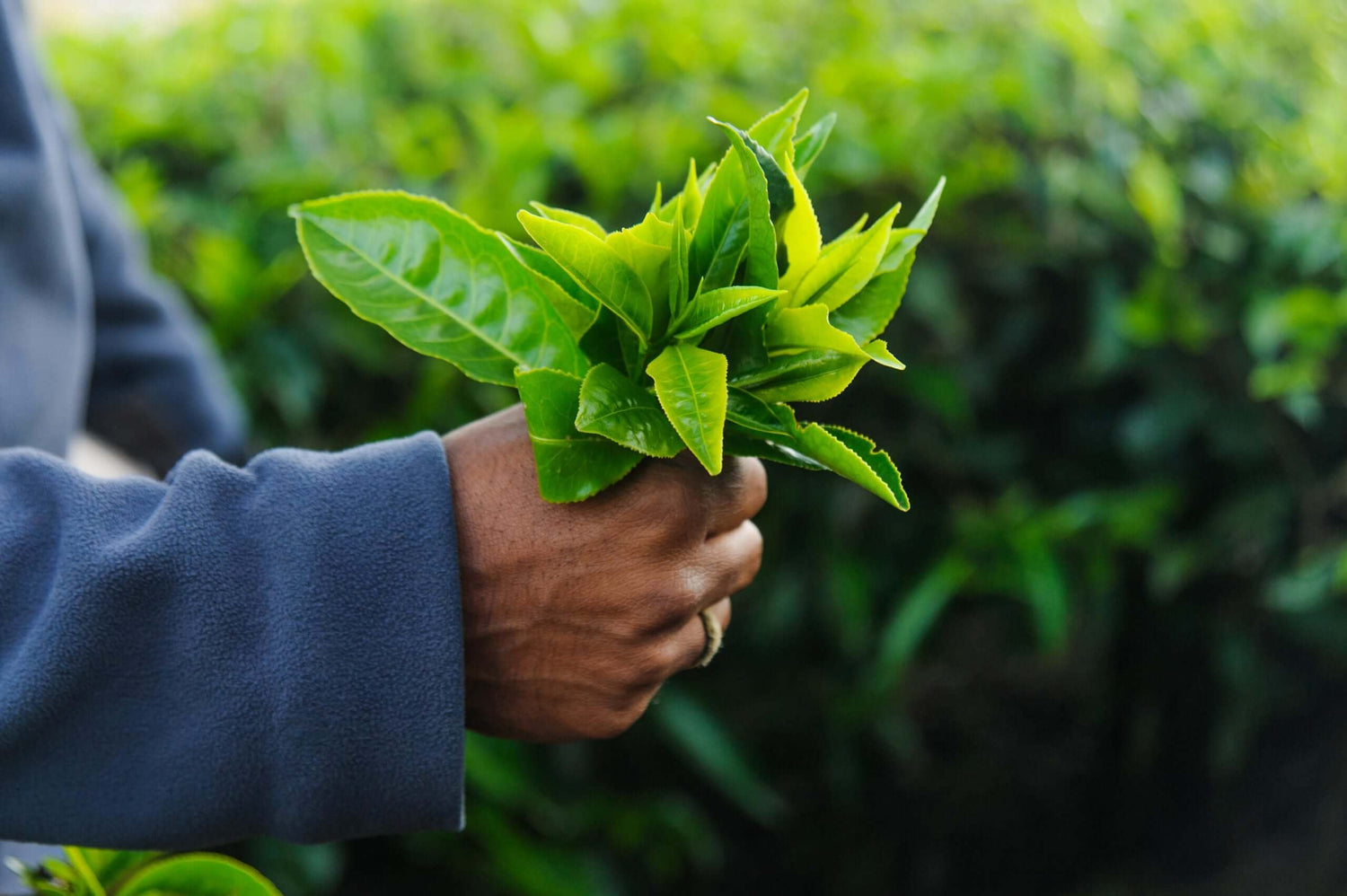
Ube is a purple yam from the Philippines, dried and ground into powder. It’s a root vegetable traditionally used in Asian baking. Matcha, on the other hand, is a powder made from shade-grown Japanese green tea leaves, stone-ground into a fine powder. One is a tuber, the other a tea: they’re different from the start. To go further, see our guides on ube and on matcha.
Taste: vanilla-like sweetness vs vegetal umami
Ube has a gentle, naturally sweet taste, somewhere between vanilla and sweet potato, with a hint of hazelnut. Very easy to love, even without sugar. Matcha offers a more complex flavor: vegetal, umami, with a slight bitterness (reduced in ceremonial grades). More “adult,” it sometimes needs a little getting used to.
Color: lavender purple vs bright green
Visually, it’s a tie: ube gives a spectacular lavender purple, while matcha brings a vivid, luminous green. Both are naturally colored, with no additives — which is why they do so well on social media.
Caffeine: the big difference
This is the deciding factor. Matcha contains caffeine (released slowly thanks to L-theanine, for steady energy). Ube contains none at all: it’s a vegetable. The result:
- Morning / energy boost → matcha.
- Afternoon / evening / children → ube.
Benefits: two different profiles
- Matcha: rich in antioxidants (catechins), long-lasting energy, focus thanks to L-theanine.
- Ube: source of antioxidants, naturally sweet so there’s less need for sugar, caffeine-free — ideal for relaxation.
Neither is “better” in absolute terms: they meet different needs.
Preparation: same whisk, similar method
Good news, both are prepared almost the same way: whisk or dissolve the powder, then add frothy milk. Matcha calls for water at 70–80°C and sifting; ube dissolves very easily. A bamboo chasen is perfect for both. Details in our ube latte and matcha latte guides.
So, which one should you choose?
- Looking for energy and enjoy vegetal flavors → matcha.
- Want comforting sweetness without caffeine, any time of day → ube.
- Can’t decide? Go for both depending on the time of day — many people even combine them in a stunning violet-and-green two-tone latte! Find them in the Matcha & Ube collection.
Frequently asked questions
Does ube or matcha contain caffeine?
Matcha contains caffeine (released gradually); ube does not, because it’s a yam. For the evening, choose ube.
Which one tastes better?
It’s a matter of preference: ube is sweet, vanilla-like, and easy to love; matcha is vegetal, umami, and more complex. Fans of gentle flavors often prefer ube, while green tea lovers tend to prefer matcha.
Are ube and matcha good for your health?
Both provide antioxidants. Matcha adds the steady energy of caffeine + L-theanine; ube stands out for its natural sweetness and no caffeine. It all depends on your needs.
Can you mix ube and matcha?
Yes! A two-tone latte (purple and green layers) is not only stunning but also delicious, bringing together the sweetness of ube and the depth of matcha.
The verdict
It’s a tie, and that’s a good thing: ube and matcha are complementary rather than rivals. Matcha for morning energy, ube for evening sweetness. Why choose? Discover both in Pure Tea’s Matcha & Ube collection.