Ube powder: a superfood with many benefits
Philippine roots and an enchanting color
Ube, also known by its scientific name Dioscorea alata, is a purple tuber native to the Philippines. This natural tuber, cultivated for centuries, is deeply rooted in Filipino culinary culture. Its intensely purple, completely natural color is one of its most fascinating assets. It comes from anthocyanins, pigment-rich compounds packed with antioxidants that give ube not only its unique look but also its well-being benefits. Increasingly popular worldwide, this powder made from purple yam wins people over with its versatility and its role in a healthy, colorful diet.
Why is ube considered a superfood?
Ube isn’t just beautiful to look at; it’s packed with essential nutrients that make it a true superfood. Its richness in natural antioxidants helps protect cells from free radicals, reducing the risk of chronic diseases. In addition, it’s rich in dietary fiber, which supports healthy digestion and better absorption of essential nutrients. Thanks to vitamins such as vitamin C and minerals like calcium, ube helps strengthen the immune system and support bone health. A natural ingredient that brings together great taste and overall well-being!
The nutritional properties of ube powder
Rich in vitamins, fiber, and minerals
Ube powder is a real nutritional goldmine. It stands out for its high vitamin C content, a powerful antioxidant that helps support the immune system, improves the nutritional profile of recipes, and supports collagen production, beneficial for the skin. This purple tuber is also rich in dietary fiber, making it a valuable ally for smooth digestion and long-lasting feelings of fullness. In addition, ube contains essential minerals such as calcium and potassium, which play a key role in bone health, muscle function, and the nervous system. Every gram of this natural powder is full of essential nutrients to nourish your body.
Benefits for your health
Including ube powder in your diet can offer meaningful benefits for your well-being. Thanks to its anthocyanins, it acts like a shield against cellular aging by neutralizing free radicals. Its fiber content not only supports digestion, but also helps maintain stable blood sugar levels—particularly beneficial for those monitoring their glycemia. What’s more, ube is a source of natural energy: its complex carbohydrates provide lasting fuel without causing glycemic spikes. Finally, its natural sweetness and the fact that it contains no additives or preservatives make it a healthy, authentic choice for all lovers of natural foods.
How to use ube powder in your cooking
Simple, original recipes to try
Ube powder is an incredibly versatile ingredient that can turn your dishes into true culinary works of art. Why not start with an ube latte? Mix a teaspoon of ube powder with hot plant-based milk, add a touch of maple syrup for sweetness, and enjoy this captivating violet drink. If you love baking, incorporate the powder into a pancake recipe: simply add a tablespoon of ube powder to your usual batter for colorful, lightly vanilla-scented pancakes. And finally, treat yourself to the famous halo-halo, a Filipino dessert made with crushed ice, coconut milk, tropical fruits, and a generous touch of ube for an authentic flavor. Elevate these creations by playing with the quantities to intensify both the color and the flavor.
Ingredient pairings to enhance ube
To highlight ube’s unique flavor, pair it with complementary ingredients like coconut, vanilla, or plant-based milk. These combinations bring out its sweet, subtly nutty notes while creating perfect harmony in your dishes. You can also pair ube with earthy flavors like sweet potato, or add crunchy textures like almonds to enrich your preparations. Balance is key: play with textures and nuances to create results that are as delicious as they are beautiful. With a few ice cubes in a smoothie or a touch in yogurt, ube will delight your taste buds while adding a vibrant color to your meals.
Choosing quality ube powder: practical tips
What to look for in a quality ube powder
When choosing a organic ube powder, several criteria should guide your purchase to ensure a natural, authentic product with optimal nutritional quality. Choose a powder from organic production, free from additives or artificial colorings, to preserve the tuber’s natural benefits. Color is a key indicator: a rich, uniform purple shade reflects a dehydration process that respects the product’s natural properties. Also check the texture: a fine, homogeneous powder is often a sign of careful control during production. Finally, opt for brands that highlight the Philippine origin of their purple tuber powder—an indicator of quality and respect for traditional farming methods.
Brand comparison and buying advice
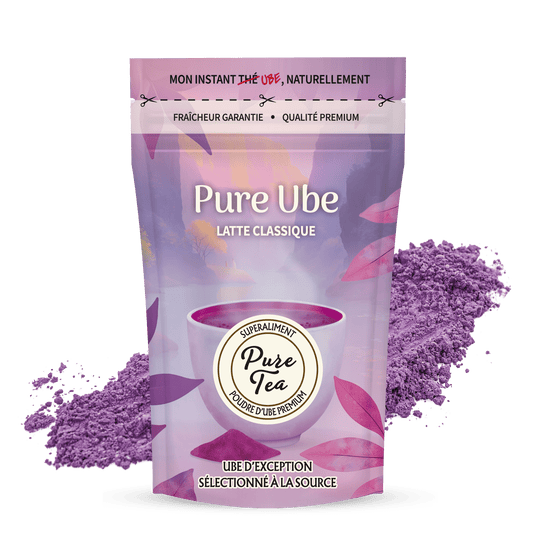
On the market, several brands stand out for the quality of their ube powder. Among them, artisans like Pure Tea offer premium sachets in a convenient format, perfect for everyday use. Prices vary depending on quantity, organic quality, and product purity, but investing in a sachet from a well-known brand guarantees better taste, high nutritional value, and the absence of additives. If your budget is limited, look for bulk options or small sizes to test before buying in larger quantities. Watch out for overly cheap products: they may contain additives or lack nutritional richness. In short, choose carefully to fully enjoy the treasures this superfood has to offer.
Trends and innovations around ube powder
A rising star in vegan and gluten-free circles
Ube powder is growing in popularity, especially among people following vegan and gluten-free diets, thanks to its nutritional qualities, naturally purple color, and its mild flavor in cooking. Its ability to color dishes spectacularly—while staying 100% natural—makes it a sought-after ingredient on social media like Instagram. Hashtags #UbeLatte or #UbeDessert are exploding, highlighting original recipes made with ube powder that are as colorful as they are wholesome. Whether in creamy lattes or tender biscuits, ube wins people over with its vanilla-scented sweetness and its authenticity. Trendy cafés and specialty shops also adopt this ingredient to offer unique products that appeal to customers looking for innovative, beautiful foods.
Future prospects for ube in global gastronomy
This naturally purple tuber isn’t limited to Filipino desserts; it’s gradually establishing itself as a superfood with high nutritional value in global gastronomy. From star chefs to home-cooking enthusiasts, everyone is exploring the many possibilities of this natural product: purple noodles, sweet drinks, creamy ice creams, or even vitamin-rich smoothies. With the rise of exotic superfoods, ube could soon rival ingredients like matcha or spirulina in popularity. Philippine producers are stepping up their efforts to meet this growing demand while respecting sustainability standards and preserving local agricultural resources. The future looks promising for this violet treasure, which continues to win over palates around the world.