You've got the right powder, the right temperature, the right technique… and yet your latte at home never has the texture of a coffee shop one. Nine times out of ten the culprit isn't your technique — it's the milk. The gap between oat, which froths like a dream, and almond, which stubbornly refuses to hold, is enormous. And there's a very simple explanation.
We compared the main plant milks on the three criteria that actually matter: foam stability, taste (and what it does to the taste of your powder), and how well it handles heat and acidity. Here's which one to choose, for which drink, and why.
What makes a milk froth (or not)
Milk foam is air trapped in a liquid film. For that film to hold, you need three things.
Protein does most of the work: it unfolds around the bubbles and forms an elastic wall. That's why soy (around 3 g of protein per 100 ml) froths considerably better than almond (often under 0.5 g). Fat brings mouthfeel and shine — but in excess it does the opposite and collapses the foam. Finally, sugars and stabilisers (sunflower oil, gellan gum, calcium phosphate) add body and stability, which is exactly what the so-called “barista” versions contain.
So a milk that's high in protein and moderately fatty will froth well. A low-protein milk gives big soapy bubbles that collapse within thirty seconds. Nothing to do with your frother.
The comparison: 7 plant milks put to the test
Oat milk — the best default choice
It's the all-round champion, and it's no accident that it took over coffee shops. Its natural beta-glucan content gives it a viscosity close to whole milk, its mild sweetness (from hydrolysed starches) balances bitterness, and its foam is fine, dense and stable for several minutes.
Verdict: excellent across the board. Go for a “barista” version if you want foam that really holds.
Watch out: it naturally sweetens the drink. Halve your syrup.
Soy milk — the highest in protein
Technically it's the best frother of the lot: firm, airy foam, almost brittle. Its weakness lies elsewhere — it curdles easily on contact with anything hot and acidic. Add a very hot matcha shot or a berry coulis to boiling soy and you'll get curds.
Verdict: perfect for a spiced chai latte or a protein latte.
Tip: heat soy to 60 °C maximum and pour the milk onto the preparation, never the other way round.
Almond milk — lovely flavour, poor foam
Low in protein and very watery, it produces airy but short-lived foam. Its strength: a subtle nutty note that pairs beautifully with pistachio and vanilla.
Verdict: superb in an iced latte, where foam matters less.
Avoid: in a hot latte if you care about latte art.
Coconut milk — tropical richness
Don't confuse the carton coconut drink (light) with tinned coconut milk for cooking (very fatty). The former froths perfectly well; the latter is too rich and collapses, but brings unmatched depth.
Verdict: the natural partner for Ube Coconut and for fruity lattes.
Tip: cut it half and half with oat to get the richness and the foam.
Hazelnut milk — the most indulgent
A generous roasted, almost praline flavour that turns any drink into dessert. Its foam is middling and a little coarse, but creamy.
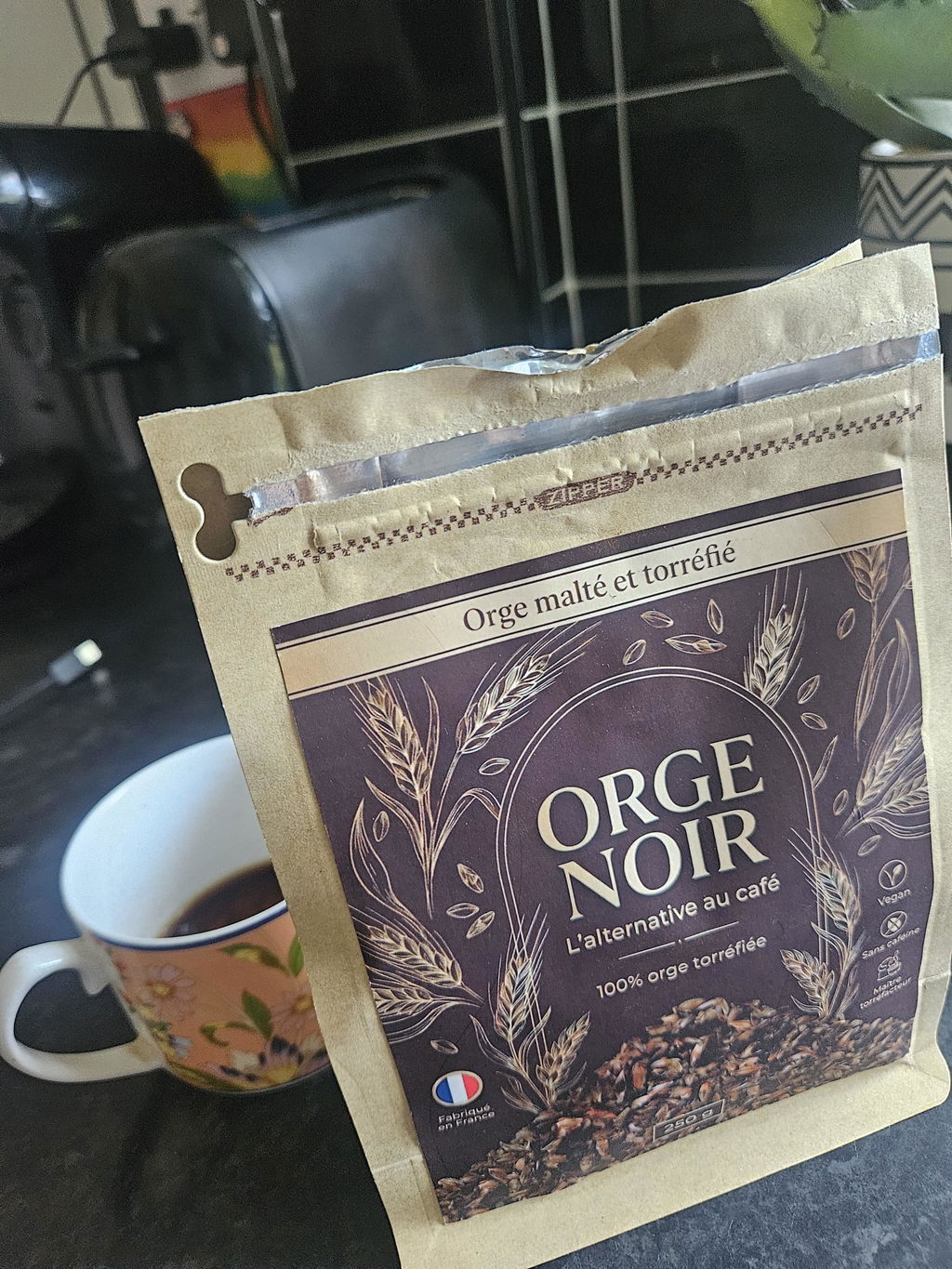
Verdict: magic with barley coffee and with Ube Pistachio.
Watch out: its flavour dominates. Don't use it with a delicate ceremonial matcha — you'll bury it.
Rice milk — the lightest
Naturally very sweet, very thin, almost protein-free: it barely froths at all. Keep it for iced drinks or for anyone juggling multiple intolerances.
Verdict: a stopgap, nothing more.
Pea milk — the rising outsider
Still little known in Europe, it delivers 3 to 4 g of protein per 100 ml — as much as cow's milk. Its foam is dense and its neutral taste leaves all the space to your powder. Right now it's the best option for a protein latte.
Verdict: the future of plant-based lattes. Worth trying if you can find it.
Which milk for which Pure Tea drink?
The right milk mostly depends on what you want to bring forward.
For a matcha latte, the aim is to temper the vegetal bitterness without smothering it. Oat is the obvious pick; light coconut also works very well. Avoid hazelnut — far too talkative next to a ceremonial matcha.
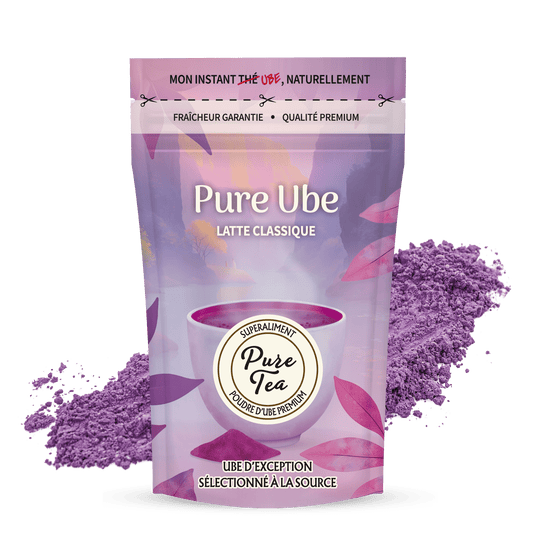
For an ube latte, it's as much visual as it is about taste: you need a very white milk so the purple stays vivid. Oat and coconut are ideal; soy, being yellower, dulls the colour slightly. Ube Vanilla with oat is probably the most universally loved pairing in the whole range.
For Fruity Latte (strawberry, raspberry, passionfruit), watch out for the acidity of the fruit: it turns soy. Stick to oat or coconut.
For a rooibos latte or an evening caffeine-free latte, oat or almond bring the softness you're after at that time of day.
Recipe: homemade barista oat milk
Barista cartons are expensive and full of additives. The good news: a homemade version froths almost as well, for a fraction of the price. The secret comes down to two rules — ice-cold water and a short blend. Heat it or blend it too long and the oat starches release, turning the milk thick and slimy.
- Put 80 g of rolled oats and 750 ml of very cold water (with two ice cubes) into a blender.
- Blend for 30 seconds maximum, not a second more.
- Strain through a fine cloth or a nut milk bag, without squeezing: squeezing is what extracts the slimy starch.
- Add 1 teaspoon of sunflower oil and a pinch of salt, then blend for 5 seconds. The oil is what gives the foam its structure.
- Keep refrigerated and use within 4 days. Shake before each use.
To froth it, heat to 60–65 °C then work it with the frother, keeping the head just below the surface for the first few seconds. Our guide to frothing a latte without a machine walks through each technique.
5 mistakes that ruin your foam
1. Overheating. Above 70 °C the proteins denature and stop holding the bubbles. Aim for 60–65 °C: the glass should be hot, never scalding.
2. Using a “light” milk. Reduced-fat versions remove precisely the fat the foam needs.
3. Tipping the powder straight into hot milk. It clumps, and the clumps puncture the foam. Always work it into a smooth paste with a little warm liquid first — a bamboo chasen or a small whisk will do, and our guide on using and caring for a chasen covers the motion.
4. Filling the jug. You need free volume to fold air in: never go past halfway.
5. Letting it stand. Plant-based foam breaks down faster than dairy foam. Serve within the minute.
Frequently asked questions
What is the best plant milk for a latte?
Oat milk, and barista versions in particular. It combines a natural viscosity close to whole milk, a sweetness that balances the bitterness of matcha or tea, and a fine foam that holds for several minutes. It's the only one that works equally well hot and iced, with every powder.
Why won't my plant milk froth?
Three likely causes: a milk too low in protein (almond, rice), a temperature that's too high (above 70 °C the proteins denature), or an overfilled jug that leaves no room for air. Switch to a barista oat, heat to 60–65 °C and fill only halfway.
Can you make a latte with almond milk?
Yes, but the foam will be light and will collapse quickly. It's an excellent choice for an iced latte, where what you want is fluidity and that nutty note. For a hot latte with proper foam, go for oat or soy.
Which plant milk for an ube latte?
Oat milk or the coconut drink. Both are white enough to preserve the vivid purple of ube, and creamy enough to carry its vanilla-like sweetness. Soy, being yellower, slightly mutes the colour.
My soy milk curdles in my latte — what can I do?
It's a reaction to heat combined with acidity. Don't go above 60 °C, and always pour the milk onto the preparation rather than the other way round. With fruit powders, which are acidic by nature, simply swap soy for oat.
Do I really need to buy “barista” milk?
Not necessarily. Barista versions contain stabilisers and a little oil that noticeably improve how the foam holds, but a good standard oat milk already gives very good results — and the homemade recipe above comes close for far less.
One last thing: the milk is only half the equation. A powder with no additives and no added sugar will always beat an industrial blend, whatever milk you use. Explore our Matcha & Ube range, or start with the Ube Discovery Pack, frother included.