A protein latte isn't a shaker in disguise. Done properly, it's a genuinely comforting drink — creamy, aromatic, with none of that chalky aftertaste — that packs 15 to 25 g of protein into the same cup as your morning matcha. Done badly, it's lukewarm soup with lumps bobbing about in it. The difference comes down to three small techniques nobody ever bothers to explain.
Here's the method, five recipes built around our favourite powders, and an honest guide to choosing a protein that won't leave your latte tasting of artificial vanilla.
Why turn your latte into a protein source
This isn't about doing sports nutrition in a mug. It's simpler than that: most of us already drink a latte every day. It may as well pull its weight.
A standard plant-milk latte gives you somewhere between 1 and 4 g of protein. Add a protein source and you're at 15–25 g — roughly two and a half eggs. In practice, three things change: fullness carries you through to lunch instead of collapsing at half ten, the texture becomes noticeably silkier (protein stabilises the foam), and the four o'clock slump becomes a proper snack rather than a sugar hit.
How much protein should you actually aim for?
Official guidance sits around 0.8 g of protein per kilo of body weight per day for a sedentary adult, and higher if you're active or over 60. The bit that gets overlooked: distribution matters as much as the total. Plenty of breakfasts top out at 5 g of protein, which leaves a sizeable gap right at the start of the day. A protein latte fills exactly that gap, with no extra meal to prepare.
The golden rule: never boil your protein
This is the mistake that ruins 90% of attempts. Above roughly 70°C (158°F), protein — whey especially — coagulates. It forms little white flecks that will never dissolve again, and the drink starts tasting of scrambled egg.
The sweet spot is 55 to 65°C (130–150°F): properly hot, lovely to drink, but you can still hold the mug. No thermometer? Heat the milk until steam rises but not a single bubble appears, then wait thirty seconds.
The three mistakes that cause lumps
- Tipping the powder into hot liquid. The sudden contact seals the outside of each clump and traps dry powder inside. Always do it the other way round.
- Mixing protein powder and flavour powder together dry in the mug. Matcha and ube need dispersing separately, otherwise they compete for what little liquid there is.
- Using already-hot milk for the base paste. The paste is always made with cold or lukewarm liquid.
The universal base: the smooth paste method
This works for all five recipes below. Give it two minutes.
- Disperse the flavour. In the bottom of a mug, mix your powder (matcha, ube, chai, barley…) with 2 tablespoons of warm water. For matcha, sift it first and whisk with a chasen. For ube, a spoon does the job.
- Make the protein paste separately. In a bowl, add your protein and 3 tablespoons of cold milk. Stir until you have a thick, completely smooth paste with not a single lump. This is the step everyone skips, and it's the one that makes the difference.
- Bring it together. Heat the remaining milk (200 ml) to 60°C. Pour it slowly onto the protein paste while whisking, then stir in the dispersed flavour.
- Emulsify. Ten seconds with an electric frother gives you a dense foam. Our accessories (frother, bamboo chasen, chashaku) make this far more consistent — but if you don't have any, our guide on how to froth a latte without a machine covers five alternatives, from a sealed jar to a cafetière.
Five protein latte recipes
1. Iced matcha protein latte
The most refreshing, and the best-looking with its two layers. Whisk 2 g of ceremonial matcha with 60 ml of water at 75°C. Separately, make the protein paste (20 g of unflavoured or vanilla protein + 3 tbsp cold milk), let it down with 200 ml of well-chilled milk, then pour over a tall glass of ice. Finish by pouring the matcha shot gently over the back of a spoon to get that green gradient. The L-theanine in matcha delivers steady energy without the jittery spike of coffee — something we go into in our homemade matcha latte recipe.
2. Creamy ube protein latte
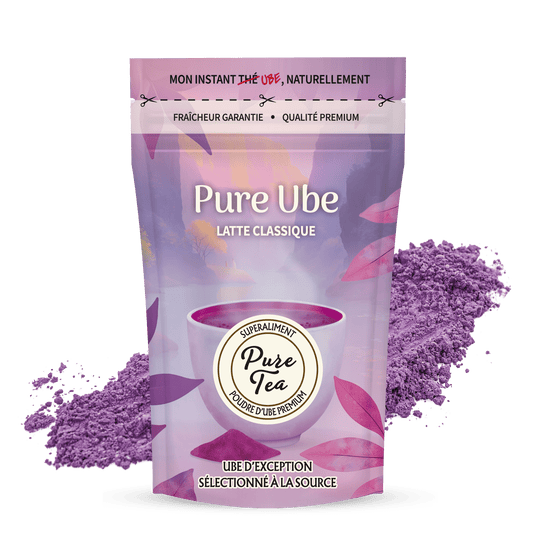
Our favourite for the afternoon, because it's completely caffeine-free. Two spoons of Pure Ube Latte dispersed in a little warm water, the usual protein paste, 220 ml of milk at 60°C. Ube brings soluble fibre and anthocyanins, and its naturally vanilla-like sweetness masks the taste of protein beautifully — easily the most forgiving powder to start with. For something more indulgent, Pure Ube Pistachio gives a nutty profile closer to a patisserie latte.
3. Spiced chai protein latte
Steep a mix of cinnamon, cardamom, ginger and cloves for 8 minutes in 100 ml of just-off-the-boil water. Strain, let it cool to 60°C, then combine with the protein paste and 150 ml of milk. The spices are assertive enough to cover any protein, even a plant-based one with a strong flavour. Our homemade chai latte recipe has the exact spice ratios.
4. Barley protein latte, zero caffeine
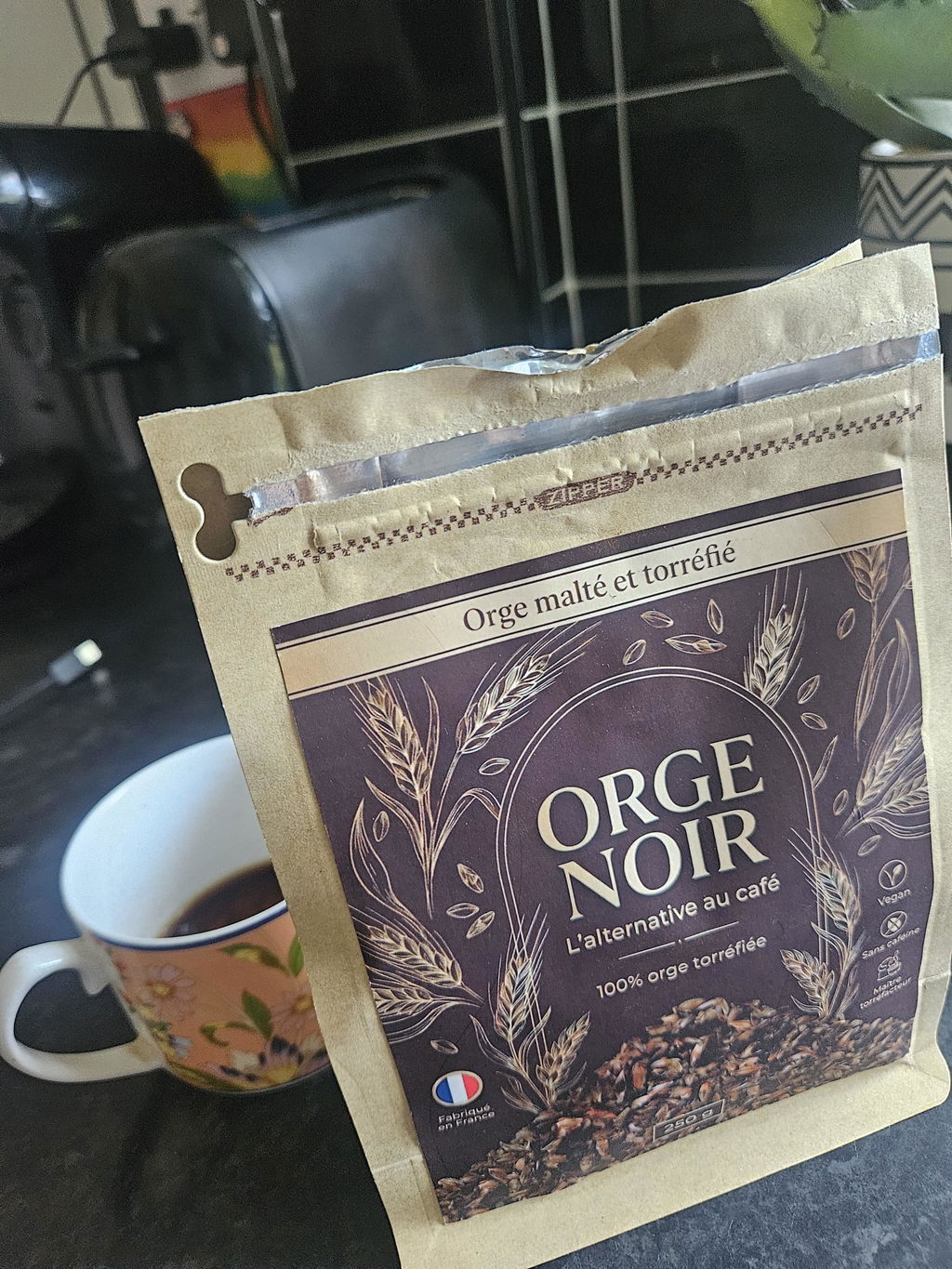
For anyone who wants the roasted taste of coffee without the caffeine. Pull a short shot of Black Barley Coffee, let it drop to 60°C, then add it to the protein base with 200 ml of frothed milk. The toasted notes of barley work remarkably well with vanilla protein: the result sits very close to a proper coffee-shop latte. It's also the only one on this list you can happily drink at nine in the evening.
5. Strawberry-coconut fruity protein latte
The summeriest of the lot. A powder from the Fruity Latte range or a Pure Ube Coconut, the protein base, well-chilled coconut milk and a handful of ice. No added sugar, a pale pink colour, and a profile that recalls a milkshake without any of the heaviness. It sits naturally alongside our iced latte summer recipes.
Choosing your protein: the no-nonsense guide
Unflavoured whey isolate. The most soluble, the most neutral in taste, around 25 g of protein per 30 g of powder. The default choice if you tolerate lactose. One caveat: it coagulates readily, so stick strictly to 65°C.
Pea or rice protein. Plant-based, higher in fibre, but with a slightly gritty texture and an unmistakable legume note. It needs a powerful flavour to hide behind: chai and matcha cope very well, a fruity latte much less so.
Micellar casein. Slow-digesting, noticeably thicker — close to a hot chocolate. Ideal in the evening, with ube or barley.
What if you skipped the powder entirely?
You can, and sometimes it's better. A latte made with 200 ml of soya milk (7 g of protein) and 2 tablespoons of whipped skyr or quark comfortably reaches 15 g of protein, with a silky texture and no aftertaste at all. Another option: 15 g of whole almond butter blended into the milk, which brings both protein and good fats. Richer, but entirely natural — very much in the spirit of our coffee-free latte alternatives.
Which milk should you use?
Soya milk is the clear winner: it's the only plant milk with a protein profile comparable to dairy (around 3.5 g per 100 ml), and it froths beautifully. Barista oat gives the best texture but almost no protein — perfect if your powder is already doing the work. Standard almond milk is the least suitable: too little protein, fragile foam. Coconut milk belongs strictly in the cold, fruity recipes.
When should you drink it?
At breakfast, it steadies your appetite through the morning. As a four o'clock snack, it comfortably replaces a biscuit. After a workout, the window is far more forgiving than people claim: what matters is the daily total, not the thirty minutes after training. In the evening, simply pick a caffeine-free version — barley, ube or rooibos.
Which leaves the main thing: a protein latte has to be something you actually want to drink. If yours tastes like a supplement, it isn't more protein you need — it's more flavour. Every powder in our Matcha & Ube collection is free from additives and added sugar: they bring the taste, you bring the structure.
Frequently asked questions
Can you make a protein latte the night before?
Yes, but iced only. Keep it in a sealed container in the fridge for up to 24 hours and shake before drinking — protein settles naturally. Hot versions should always be made fresh.
Why is my protein latte lumpy?
Almost always because the powder went straight into hot liquid. Always make a smooth paste with a little cold milk before adding anything hot, and never go above 65°C.
Does adding protein destroy the benefits of matcha?
No. The catechins in matcha are still there. Some dairy proteins may slightly reduce absorption, but the effect is marginal compared with simply drinking matcha regularly.
Will a protein latte make me gain weight?
That depends on your diet as a whole, not on one drink. A version with no added sugar on plant milk lands around 150–200 kcal — considerably less than a pastry, and far more filling.
Can ube powder be my only source of protein?
No. Ube is rich in fibre, anthocyanins and complex carbohydrates, but its protein content is low. It brings taste, colour and fibre — the protein has to come from somewhere else.