Drinking green tea is a universal gesture, repeated billions of times every day around the world. Yet behind this simple habit lies an ancient, complex and fascinating history, where botany, social rituals, pharmacopoeia and art of living have been intertwined for more than three thousand years. And while there is an infinite variety of green teas, two types hold a special place in Chinese culture: Chun Mee, with its fruity, invigorating profile, and Sencha, smooth and vegetal. These are the two teas, both grown according to organic farming principles, that make up the blends of the Pure Tea house.
In this article, we invite you to take a deep dive into the origins of green tea, to understand the agronomic and sensory specificities of Chun Mee and Sencha, and to review the recent scientific studies that shed light on their effects on the human body.
The Origins of Green Tea: One Plant, Many Traditions
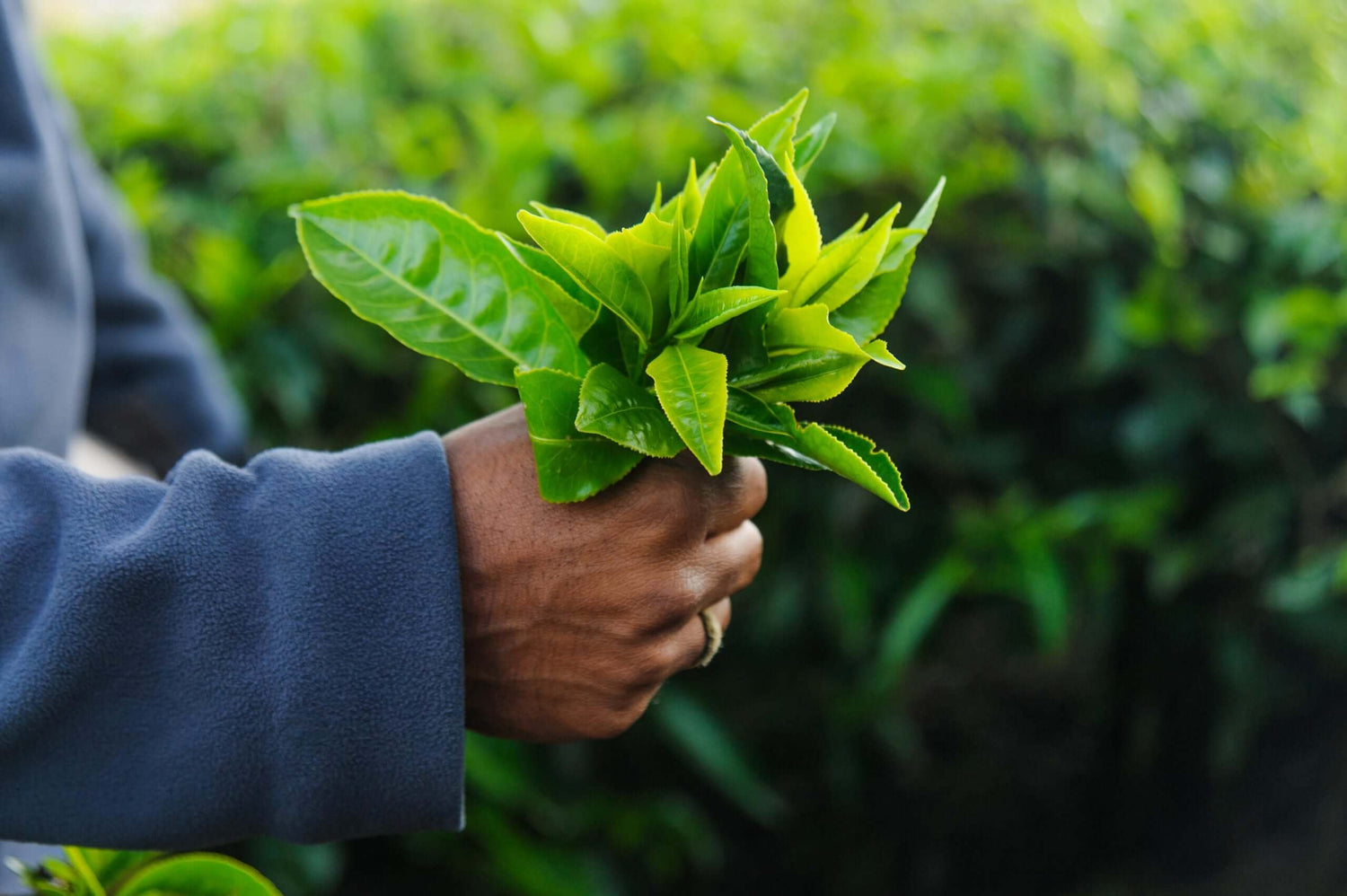
The tea plant, Camellia sinensis, is native to southern China and northern India. According to historians, its consumption as an infusion dates back to the Shang dynasty (between 1600 and 1046 BCE). Initially used as a medicinal plant, tea gradually established itself as a daily beverage among the imperial elite, in monasteries, and eventually across all layers of Chinese society.
What sets green tea apart from other forms (black, oolong, white) is that it undergoes no oxidation. Immediately after picking, the leaves are heated (by steam or in a metal wok) to inactivate the enzymes responsible for oxidation. This step, called fixation, preserves the catechins, amino acids, chlorophylls, and other volatile compounds responsible for its taste and benefits.
As early as the Tang and Song dynasties, writings such as Lu Yu’s Classic of Tea (8th century) described in detail the methods of cultivation, preparation and the virtues of green tea. This cultural heritage has spanned the centuries, adapting to evolving agricultural practices while maintaining a deep coherence.
Chun Mee green tea: balance between freshness, energy and finesse
Among the many varieties produced in China, Chun Mee is one of the most iconic green teas. Native to the Jiangxi and Zhejiang provinces, it is recognizable by its curved leaves, whose shape evokes a delicate eyebrow—hence its name, Chun Mee (“old man’s eyebrow” in Chinese).
Artisanal production that respects the leaf
Chun Mee leaves are generally harvested in spring, sometimes in summer depending on the region. Once picked, they are withered, then heated in large metal woks at high temperature in a process that requires precision and skill. Hand-rolling gives the leaves their characteristic shape. A final roasting step allows the flavor to be fine-tuned, remaining gentle but with a slight acidity on the finish.
In organic versions, such as those selected for Pure Tea blends, this process remains manual or semi‑artisanal, with no additives or added flavorings, in order to respect the tea’s natural chemistry as much as possible.
A distinctive sensory profile
Chun Mee develops a pale to golden yellow hue when brewed, sometimes slightly cloudy. On the palate, it stands out for its vegetal freshness, complemented by fruity, almost tangy notes, which sometimes evolve into green plum or citrus zest aromas.
It is often recommended for those who want a lively yet gentle tea, with a moderate caffeine content, making it a good alternative to morning coffee or a daytime companion drink. This same organic Chun Mee green tea is used in our energizing blend, Thé Vert Energy Bio.
Sencha green tea: smoothness, balance, and everyday use
While the name Sencha often evokes Japanese teas, there is also a Chinese tradition of Sencha, often less known but equally refined. In this case, the term "Sencha" refers to a production method similar to the Japanese method but adapted to Chinese terroirs, particularly in the Hunan and Anhui regions.
Manufacturing method
Chinese Sencha is generally steamed quickly after harvest, then rolled and dried. This process, although different from the wok-firing used for other Chinese green teas, preserves a chemical profile close to that of the fresh leaf, with a high level of L-theanine, an amino acid responsible for the relaxing effect often associated with green tea.
The result is a tea with a smoother, rounder taste and a very light astringency, if any. Unlike some Japanese Sencha, this one has a less briny and more floral profile.
An ideal base for wellness blends
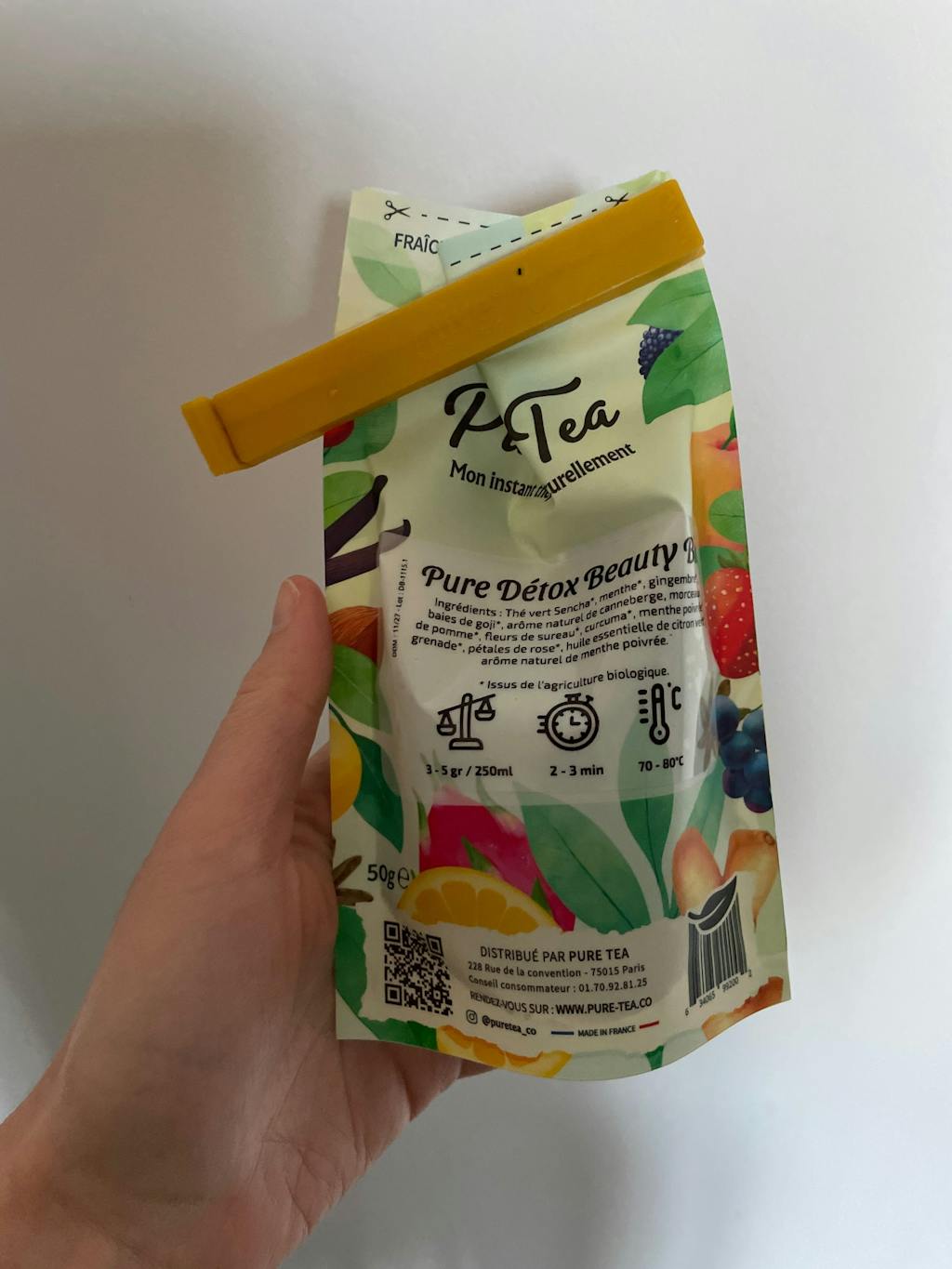
Thanks to its smoothness and low bitterness, Chinese Sencha is often used as a base in herbal infusions. It pairs beautifully with mint, citrus fruits, or roots such as ginger. This is why you’ll find it in recipes like Organic Citrus & Ginger Sencha, Détox Beautea Queen, or Moroccan Mint Tea.
Nutritionally, it is rich in catechins, polyphenols, and chlorophyll, and supports gentle detoxification while providing a mild, balanced stimulation.
What science says: the benefits of green tea studied in depth
Numerous scientific studies have focused on the components of green tea. Here is an overview of the main active compounds and their presumed effects on health:
1. Catechins (EGCG)
Catechins are powerful antioxidants. The most studied, EGCG, has shown effects in:
-
the neutralization of free radicals
-
the prevention of cellular aging
-
the regulation of fat metabolism
2. L-theanine
Found mainly in high-quality green teas, it is known for:
-
induce a state of mental relaxation without drowsiness
-
improve focus when combined with caffeine
-
help maintain a stable mental balance, especially useful to counteract the effects of stress
3. Chlorophyll
The chlorophyll in unoxidized leaves is believed to have the following effects:
-
gentle detoxifiers
-
liver protectants
-
potentially beneficial for digestion
It should be noted that these effects are linked to regular, moderate, and high-quality consumption—such as that provided by untreated organic green teas.
How to brew these green teas to get the very best from them
Chun Mee
-
Ideal temperature: 75–80°C
-
Infusion Time: 2 to 3 minutes
-
Tip: avoid oversteeping, which increases bitterness
Chinese Sencha
-
Ideal temperature: 70–75°C
-
Steeping time: 1.5 to 2.5 minutes
-
Tip: can be cold‑brewed (slow infusion in fresh water for 4 hours)
Chun Mee and Chinese Sencha represent two complementary approaches to green tea. The first, lively and fruity, is a great companion for an active start to the day. The second, rounder and more vegetal, fits naturally into calmer moments or after meals. Both carry on a living tradition: a tea rooted in nature, shaped by human hands, and able to cross centuries without losing its appeal.
With their diverse flavors, subtle botanical differences, and nutritional properties, they invite you to explore green tea not as a single product, but as a world of nuances, traditions, and know-how. Learning to prepare and taste them is also an opportunity to slow down—and reconnect with a simple yet meaningful ritual.