You’ve probably already seen these enchanting purple lattes on Instagram, these hypnotic mauve desserts in your favorite cafés, or these stunning lavender-toned smoothies. Behind this wellness trend is ube, an ancient tuber from the Philippines that’s winning over kitchens around the world.
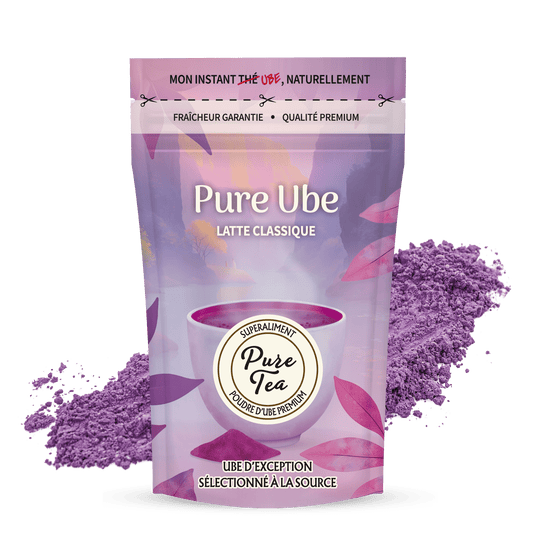
At Pure Tea, we were immediately captivated by this millennia-old superfood that combines exceptional nutritional benefits, a uniquely delicate flavor, and a spectacular natural color. That’s why we created our Pure Ube Latte range and Pure Ube Vanille range: to help you discover the authenticity of Philippine ube, in its purest and highest-quality form.
🔍 The Key Points About Ube
| Appearance | Information |
|---|---|
| Scientific name | Dioscorea alata |
| Origin | Philippines and Southeast Asia |
| Color | Intense natural violet (anthocyanins) |
| Taste | Mellow, with vanilla and hazelnut notes |
| Benefits | Powerful antioxidants, fiber, potassium, vitamins |
| Uses | Lattes, smoothies, pastries, desserts |
| Available at Pure Tea | Pure Ube Latte & Pure Ube Vanille |
In this complete guide, you’ll discover everything you need to know about ube: its ancient origins, its health benefits, how to cook it, where to buy it, and why it has become the trendy ingredient in wellness lattes and smoothies. Whether you’re a wellness enthusiast, a cooking lover, or simply curious about new flavors, this guide is made for you.
Table of contents
- What exactly is ube?
- History and origins of ube in the Philippines
- Nutritional benefits and a superfood
- Ube vs Taro vs Purple Sweet Potato
- Ube in traditional cooking
- Modern creations: lattes, desserts, bubble tea
- How to cook ube: a practical guide
- Where to buy quality ube
- Easy recipes to get started
- Complete Ube FAQ
What Is Ube? Much More Than Just a Purple Potato
Ube (pronounced "oo-bay"), scientifically known as Dioscorea alata, is a purple yam native to the Philippines and Southeast Asia. Contrary to what many people think, ube is neither a purple sweet potato, nor taro—it’s a unique tuber belonging to the yam family.
The Ube’s Distinctive Features
Appearance : A rough brown-gray skin, almost like bark, which may not seem very appealing at first glance. The tubers can reach impressive proportions, weighing sometimes up to 10 kg.
Inside flesh : A deep, vibrant violet—almost hypnotic—which can range from light mauve to intense purple depending on the variety and freshness. This natural color comes from anthocyanins, the same powerful antioxidants found in blueberries.
Aromatic profile : Naturally sweet and delicate, with subtle notes of vanilla, hazelnut, and sometimes white chocolate. Some people even detect hints of coconut or pistachio.
The Millennia-Old History of Ube: A Philippine Cultural Heritage
Ancient Origins
Ube isn’t a culinary trend: it’s one of the oldest foods cultivated by humankind. Archaeological traces of ube have been found in Ille Cave in Palawan, in the Philippines, dating back more than 11,000 years. This fascinating discovery shows that ube was already a valuable food for the first inhabitants of the archipelago.
In traditional Philippine culture, ube holds a sacred place. The harvest, which usually takes place toward the end of the year, is an important time for rural families. In some regions, ube is considered a “sacred tuber” that must be treated with respect—under the local beliefs, failing to do so could bring bad luck.
From Manila to Manhattan: The Global Rise
For centuries, ube remained a closely guarded secret of Philippine cuisine. But everything changed in 2016, when the Manila Social Club in New York launched its famous ube doughnuts. These spectacular violet doughnuts instantly became a sensation, propelling ube onto the international culinary scene.
Today, ube has become a global phenomenon, driven by:
- The Philippine diaspora proudly sharing its culinary heritage
- Social media where the photogenic violet color goes viral
- Creative chefs who reinvent this traditional ingredient
- The quest for natural superfoods in a healthier way of eating
The Exceptional Nutritional Benefits of Ube
A Superfood With Many Benefits
Ube isn’t just a pretty purple tuber: it’s a true nutrition powerhouse that deserves its place in a balanced diet.
Rich in antioxidants : The anthocyanins responsible for its violet color are powerful antioxidants that help fight free radicals and cellular aging. These compounds have shown anti-inflammatory and protective properties for the cardiovascular system.
Source of dietary fiber : Ube contains a significant amount of fiber that supports digestion, helps regulate intestinal transit, and contributes to that satisfying feeling of fullness. A precious ally for digestive well-being.
Essential minerals: Especially rich in potassium (essential for heart function and blood pressure regulation), ube also provides magnesium, phosphorus, and calcium.
Vitamins: In particular vitamin C to support the immune system, as well as important B vitamins for energy metabolism.
Moderate glycemic index: Unlike some starchy foods, ube has a relatively low glycemic index, meaning glucose is released gradually into the bloodstream. Ideal for avoiding blood sugar spikes.
Balanced energy value: About 140 calories per 100g, ube provides lasting energy without excess.
Nutritional Comparison: Ube vs Other Tubers
Compared with classic sweet potato, ube offers:
- 2 to 3 times more antioxidants thanks to its anthocyanins
- A similar level of complex carbs
- A richer mineral profile, especially potassium
- Excellent digestibility thanks to its creamy texture
The Pure Tea Commitment: Superior-Quality Ube
At Pure Tea, we make no compromises on the quality of our ube. Here’s how we ensure excellence:
🌱 Rigorous Selection
We select our ube based on strict criteria:
- Controlled and traceable Philippines origin
- Growing practices that respect natural cycles and biodiversity
- Committed partners in responsible agriculture
- Quality checks at every step
🤝 Fair Trade
We work directly with Philippine producers committed to fair practices:
- Fair, stable compensation
- Long-term, lasting relationships
- Total respect for working conditions
- Support for local communities
🇫🇷 Made in France Assembly
Our ube comes from the Philippines, but that’s in France that the magic happens:
- Rigorous quality checks upon receipt
- Assembled and blended in our French workshops
- Packed in small batches to guarantee freshness
- Recyclable packaging (PP5 material)
✨ Total Traceability
We know the exact origin of every batch of ube we sell. From the plantation in the Philippines to your cup, every step is tracked and controlled.
📦 Logistics Commitment
- 24-hour dispatch: Orders placed before 3pm are shipped the same day
- Free shipping from €39 in mainland France
- Refund with signature: All our parcels are secured
- Insurance included: Free returns in case of loss or theft
Ube vs Taro vs Violet Sweet Potato: Untangling the Confusion
The Essential Differences
Ube (Purple Yam)
- Family: Dioscoreaceae (yams)
- Color: Intense, uniform purple
- Texture: Creamy and silky once cooked
- Flavor: Sweet, with vanilla and hazelnut notes
- Origin: Philippines, Southeast Asia
The Taro
- Family: Araceae
- Color: Gray-white with purple speckles
- Texture : More starchy and dry
- Taste : More neutral, earthy
- Origin : Asia, Oceania
The Purple Sweet Potato
- Family : Convolvulaceae
- Color : Varies in violet, often with white veins
- Texture : Fibrous
- Taste : Sweeter, closer to orange sweet potato
- Origin : Central and South America
How to Tell Them Apart in the Kitchen
In store, look for these clues:
- Skin : Ube has a rough, thick, almost woody-looking outer skin
- Shape : Often irregular and twisted for ube
- Raw flesh : Ube reveals a deep, uniform violet when cut
Ube in Traditional Filipino Cuisine
Classic Preparations
Ube Halaya : The foundational Filipino recipe. This thick, intensely fragrant jam is made with grated ube, sweetened condensed milk, coconut milk, and butter. Slow cooking—often for several hours—transforms the ube into a smooth, glossy paste. Ube halaya is served for big occasions: Christmas, Easter, birthdays, and weddings.
Halo-Halo : The national Filipino dessert—its name literally means “mix.” This chilled creation combines shaved ice, sweet beans, candied fruits, colorful jellies, leche flan, and of course, a generous portion of ube halaya or ube ice cream. A true explosion of textures, colors, and flavors.
Ube Cake (Ube Chiffon Cake) : A light, fluffy, melt-in-your-mouth cake, often topped with cream cheese frosting or buttercream, and sometimes finished with shredded coconut. The texture is exceptionally light—almost cloud-like.
Ube Pandesal : These classic Filipino stuffed rolls filled with ube halaya are a breakfast or snack staple.
Bibingka with Ube : A traditional rice cake baked in banana leaves, elevated by the addition of ube.
The Festive Meaning
In Filipino culture, serving an ube dessert during a celebration is a sign of affection and generosity. Ube halaya, which takes time and patience to prepare, represents the love and care shown to guests. That’s why it’s always found at major family celebrations.
Ube 2.0: Modern Creations Making Waves
The Revolution of Natural Lattes
Ube Latte : The signature drink that has conquered the whole world. At Pure Tea, we’ve perfected this recipe by creating our Pure Ube Latte: a premium blend that lets you prepare an authentic latte in just a few seconds. Our formula brings together the natural sweetness of ube from the Philippines and an irresistibly creamy texture—finished with a spectacular natural violet color. Perfect hot in winter or iced in summer with ice cubes and tapioca pearls.
Ube Vanilla Latte : Our Pure Ube Vanilla takes the experience even further by pairing ube with vanilla from Madagascar. This combination delivers an even more indulgent drink, with deeper notes and an incomparable smoothness on the palate. It’s our “cozy” version of the ube latte—perfect for reading afternoons or relaxing evenings.
Ube Matcha Latte : A bold fusion of two wellness trends. The violet of ube meets the green of our Japanese matcha to create a drink that’s as beautiful as it is well-balanced in flavor. Powerful antioxidants from both sides!
Ube Bubble Tea : Find ube in our Bubble Tea collection to create your own vibrant ube bubble teas, topped with tapioca pearls, jelly, or even mochi. A 100% natural Instagram-friendly experience.
Pastry Innovations
Ube Doughnuts : These violet doughnuts, popularized in New York, are now available in every shape: filled with ube halaya, glazed with ube, or in a crinkle version (crackly cookies).
Ube Ice Creams and Sorbets : Artisanal ice cream makers around the world now offer their take on ube ice cream. Ube’s creamy texture is perfectly suited to this preparation.
Ube Macarons : French pastry chefs have embraced ube to create macarons in a delicate shade of violet, with a smooth, creamy ube ganache.
Ube Cheesecake : The richness of cream cheese pairs beautifully with the sweetness of ube to create stunning marbled cheesecakes.
Ube Croissants and Viennoiseries : Ube is making its way into bakeries with stuffed croissants, ube milk bread, and even revamped versions of chocolate bread.
Surprising Creations
Ube Burger Buns : Yes, you read that right! Bakeries are selling purple buns for burgers, adding a truly spectacular visual touch.
Ube Nanaimo Bars : A Canadian-Philippine twist that swaps the classic custard cream for ube cream.
Filipino Rocky Road : The classic rocky road reimagined with ube-flavored marshmallows.
Ube Mochis : In these little Japanese rice cakes, ube is the ideal partner.
Practical Guide: How to Cook with Ube
The Different Forms of Ube Available
Fresh Ube
Benefits : Authentic flavor, optimal texture, no additives Disadvantages : Hard to find outside Asia, takes time to prepare, seasonal availability Where to find : Specialized Asian grocery stores, Filipino markets in your area Preparation : Must be cooked for a long time (1–2 hours in boiling water), then peeled and mashed
Frozen Ube
Benefits : Available all year round, already peeled, good shelf life Disadvantages : Slightly altered texture due to freezing Where to find : Asian grocery stores, frozen aisle Preparation : Thaw, then reheat or use directly in recipes
Ube Powder
Benefits : Ultra-practical, long shelf life, precise dosing, versatile Disadvantages : Less intense flavor than fresh, sometimes needs an extra natural coloring Where to find : Specialized online shops, Asian grocery stores How to use : 5–10 g per cup of liquid, to mix with milk or water
Ube Halaya (Ube Jam)
Benefits : Ready to use, sweet and creamy flavor, ideal texture Disadvantages : Contains added sugar, less control over the ingredients Where to find : Asian grocery stores, online How to use : Directly as a topping, garnish, or ingredient
Ube Extract
Benefits : Maximum flavor intensity, just a few drops are enough Disadvantages : Doesn’t give the color—only the flavor Where to find : Filipino grocery stores, online How to use : 1–2 teaspoons per recipe
Base Recipe: Homemade Ube Halaya
Ingredients :
- 1 kg fresh ube (or 500 g frozen ube, grated)
- 400 ml concentrated coconut milk
- 300 g sugar (adjust to your taste)
- 200 ml sweetened condensed milk
- 50 g butter
- A pinch of salt
Preparation :
- If using fresh ube, cut it into pieces and boil for 1–2 hours until a fork goes through it easily
- Peel and blend until smooth (food processor or blender)
- In a wok or a large nonstick pan over medium heat, combine the ube mash, coconut milk, sugar, and sweetened condensed milk
- Stir CONSTANLY for 30–45 minutes. This is essential to prevent the mixture from sticking and burning
- The mixture will gradually thicken and turn glossy
- Add the butter and mix until fully incorporated
- Keep cooking until the mixture pulls away from the edges of the pan
- Pour into a lightly oiled dish, let cool completely
Storage : Up to 2 weeks in the refrigerator in an airtight container
5 Easy Recipes to Start with Ube
Ube Latte Perfect with Pure Ube Latte (2 minutes)
The easiest way to discover ube! Our Pure Ube Latte is specially formulated to give you a creamy latte in just a few moments.
Preparation :
- Mix 2 teaspoons of Pure Ube Latte with 50ml hot water
- Add 250ml hot milk (plant-based or not) and mix
- For a frozen version: use cold water and cold milk with ice cubes
- Optional: add a shot of espresso for a caffeinated ube latte
💡 Pure Tea Tip: Froth your milk for a coffee-shop-worthy texture!
2. Delicious Ube Vanilla Latte (3 minutes)
With our Pure Ube Vanille, create an even more indulgent drink thanks to the perfect harmony between Philippine ube and Madagascar vanilla.
Preparation :
- 2 teaspoons of Pure Ube Vanilla
- 50ml hot water
- 200ml almond or coconut milk
- A touch of maple syrup for extra indulgence
- Sprinkle with shredded coconut for decoration
3. Ube Smoothie Bowl (10 minutes)
- 2 tablespoons of Pure Ube Latte
- 1 frozen banana
- 150g Greek or plant-based yogurt
- 100 ml milk
- Toppings: fresh fruit, granola, shredded coconut, goji berries
Blend all ingredients until smooth and creamy, pour into a bowl, and top generously.
4. Purple Pancakes with Pure Ube (20 minutes)
Turn your usual pancake recipe into a spectacular purple version:
- Add 2 tablespoons of Pure Ube Latte to your pancake batter
- Cook as usual
- Serve with maple syrup, fresh fruit, and a spoonful of Greek yogurt
- For even more indulgence: use our Pure Ube Vanilla!
5. Iced Ube Latte, Bubble Tea Style (5 minutes)
- 2 teaspoons of Pure Ube Latte
- 50ml cold water
- 250ml cold milk
- Ice cubes
- Cooked tapioca pearls (available in our Bubble Tea collection)
Mix, add the pearls, and enjoy a homemade version of the famous ube bubble tea!
More Recipes and Inspiration
Join the Pure Tea community on Instagram @puretea_co and TikTok @puretea_co to discover new creative recipes with ube every week!
Where to Buy Quality Ube in France?
Pure Tea: Your Source for Superior-Quality Ube
At Pure Tea, we’ve selected the highest-quality ube to bring you an authentic experience—without compromise on health or the environment.
Our Ube Products
🇵🇭 Pure Ube Latte - The purple secret of the Philippines
- Ready-to-use blend for a creamy latte in just a few seconds
- Superior ube, with no artificial additives
- Spectacular natural color and authentic flavor
- €9.90 per pouch - Free shipping from €39
💜 Pure Ube Vanille - Madagascar notes
- Harmonious pairing of ube from the Philippines and Madagascar vanilla
- Perfect for lovers of delicate, indulgent flavors
- 100% natural, no coloring agents or artificial flavors
- €9.90 per pouch - Multiple sizes available
Why Choose Pure Tea Ube?
✅ Premium Quality : Carefully selecting the best Philippine tubers
✅ Total Traceability : We know the exact origin of our ube and work directly with dedicated producers in the Philippines
✅ Fair Trade : We prioritize long-lasting partnerships with respected producers who are paid fairly
✅ No Compromise : No artificial flavors, no synthetic colorings—only the natural purity of ube
✅ Made in France : Our blends and assemblies are made in France with rigorous quality control
✅ Fast Shipping : Order before 3:00 pm = shipped the same day, free delivery to pickup points from €39
Our Quality Commitments
At Pure Tea, we make no compromises on quality. Each batch of ube is:
- Thoroughly checked before packaging
- Packed in small batches to ensure maximum freshness
- Protected in a recyclable package that preserves all the aromas
- Tasted and approved by our team before going on sale
Alternatives for Fresh Ube
If you’re looking for fresh or frozen ube for traditional recipes, you can turn to:
- Asian grocery stores specialized in your area
- Philippine Markets where you can sometimes find frozen ube
Buying Tips for Fresh Ube :
- Choose firm tubers, with no soft parts
- The skin should be intact and free of spots
- For frozen ube, check that there aren’t excessive ice crystals (a sign of thawing)
Chef Tips for Working with Ube
Essential Techniques
Enhance the Color : If your ube powder doesn’t deliver the spectacular purple shade you’re after, you can add a few drops of natural colorant made from red cabbage or beetroot. Some chefs add a touch of blue spirulina to bring out the purple.
Balance the Flavors : Since ube has a fairly mild taste, feel free to pair it with:
- Coconut (a natural match)
- Vanilla (enhances the delicate notes)
- Lemon or lime (adds a refreshing touch)
- White chocolate (creates a delicious contrast)
- Matcha (visual and flavor contrast)
Preserve the Color : The ube may lose a little of its vivid purple when cooked. To keep the color:
- Don’t overcook it
- Add a pinch of citric acid or a few drops of lemon juice
- Avoid cooking at very high temperatures
Ideal Texture: For a creamy, smooth texture in your preparations:
- Blend the ube purée for a long time
- Add fats (butter, coconut oil, coconut milk)
- Sieve it to remove fibers if needed
Winner Flavor Matches
Classic Pairings :
- Ube + Coconut + Pandan
- Ube + Cream cheese + Lime
- Ube + Vanilla + Hazelnut
- Ube + White Chocolate + Macadamia
- Ube + Matcha + Sesame
Bold Pairings :
- Ube + Passion + Basil
- Ube + Yuzu + Ginger
- Ube + White Miso + Caramel
- Ube + Lavender + Honey
- Ube + Earl Grey + Bergamot
Ube and the “Visually Stunning Food” Trend
The Instagram Phenomenon
Ube perfectly embodies today’s “food porn” trend on social media. Its naturally violet color is:
- Instagrammable to perfection
- Rare in natural foods
- Photogenic in every light
- Instantly recognizable
Hashtags #ube, #ubedessert, #ubelatte add up to millions of posts. This viral buzz has played a major role in popularizing this traditional ingredient with a young global audience.
More Than Just Aesthetics
But ube isn’t just a “pretty face.” Its lasting success is built on:
- Real, great taste quality: Its unique flavor wins over even beyond its visual appeal
- Nutrition-related benefits: Consumers appreciate its benefits
- An authentic cultural story: The connection to Filipino culture adds depth
- A culinary versatility: It’s not limited to a single use
The Economic and Cultural Impact of Ube
A Boost for Philippine Agriculture
The global craze for ube has had positive ripple effects on the Philippine economy:
- Increasing international demand
- Developing new farms
- Creating jobs in processing and exports
- Celebrating a traditional local product
The Pride of the Diaspora
For Filipinos living abroad around the world, ube has become a symbol of cultural pride. Seeing this ingredient from their childhood celebrated internationally strengthens the feeling of belonging and truly honors their culinary heritage.
A Cultural Bridge
Ube is your gateway to discovering Filipino cuisine—often less known than other Asian cuisines. An ube latte can lead you to explore halo-halo, lumpia, adobo, and many other culinary treasures from the Philippines.
FAQ: Everything You Need to Know About Ube
Does the ube really have this color naturally or is it artificial? Yes, ube’s naturally violet color is 100% natural! It comes from anthocyanins, natural pigments. However, some commercial products add colorings to intensify the shade—so always check the ingredients.
Can I eat ube raw? No, ube must ALWAYS be cooked before eating. Raw, it’s tough, hard to digest, and may contain compounds that irritate the stomach.
Is ube suitable for vegan and gluten-free diets? Yes! Ube itself is naturally vegan and gluten-free. However, watch out for commercial preparations (like ube halaya), which may contain milk or other non-vegan ingredients.
Can I grow ube in my garden? Yes, if you live in a tropical or subtropical climate region. Ube needs warmth (25–30°C), moisture, and a growing season of 8–10 months. In temperate climates, greenhouse cultivation can be considered.
What’s the difference between ube and purple taro? They’re two completely different tubers! Ube is a yam (Dioscorea alata) with a uniform, intense purple color. Taro (Colocasia esculenta) has gray-white flesh with purple speckles and a more earthy flavor.
Is ube high in calories? With around 140 calories per 100g, ube is a moderate starchy food. It’s comparable to potatoes. However, watch out for sweet preparations like ube halaya, which contain lots of sugar and condensed milk.
Where does ube grow mainly? Ube is originally from the Philippines and Southeast Asia, where it’s cultivated extensively. You can also find it on Pacific islands, in Africa (especially Nigeria), in the Caribbean, and in South America. New Caledonia also has a long-standing tradition of growing yams.
Can I replace ube with purple sweet potato in recipes? In theory, yes—but the result will be different. Purple sweet potato has a sweeter taste, a more fibrous texture, and a less intense color. Ube powder remains the closest option to the original.
How long does ube powder keep? Stored in an airtight container, away from light and moisture, ube powder lasts 1–2 years. Always check the expiration date on the packaging.
Does ube have any medical contraindications? Ube is generally safe for most people. However, like all starchy foods, people with diabetes should consume it in moderation and keep an eye on their blood sugar levels. If you’re allergic to yams, of course, avoid ube.
The Future of Ube: More Than Just a Passing Trend
Unlike other fleeting food trends, ube seems set to last. Several factors support this prediction:
A solid cultural base : Contrary to trends that are purely marketing-driven, ube has millennia of history and traditional use.
Growing demand for natural superfoods : Consumers look for ingredients that are beautiful, tasty, and beneficial for health.
Ongoing innovation : Chefs and manufacturers never stop coming up with new ways to use ube.
Sustainability : Ube cultivation is relatively sustainable, requiring few chemical inputs.
International recognition : Ube has moved beyond the “exotic curiosity” stage and has firmly established itself in global culinary offerings.
Conclusion: Discover Ube with Pure Tea Today
Ube is so much more than just a trendy ingredient. It’s:
- A taste journey through the Philippines’ subtle, delicate flavors
- A cultural discovery of a culinary heritage that dates back millennia
- A natural superfood rich in antioxidants, fiber, and essential minerals
- A burst of creativity in the kitchen, from baking to wellness drinks
- A visual experience thanks to its 100% natural purple color
At Pure Tea, we’ve selected the highest-quality ube to offer you an authentic, wholesome experience. Our Pure Ube Latte and Pure Ube Vanille products contain no artificial additives, and let you whip up a latte worthy of the best coffee shops in just a few seconds.
Ready to discover Ube?
🛒 Discover our Ube collection and order now 🚚 Free shipping from €39 in France ⚡ 24h dispatch for orders placed before 3pm 💜 Satisfaction guaranteed or refunded - Our Pure Tea quality promise
Join the Pure Tea Community
Share your ube creations on social media and tag us:
- 📸 Instagram : @puretea_co
- 🎵 TikTok : @puretea_co
- 📘 Facebook : Pure Tea
Join thousands of people who have embraced ube in their wellness routine and discover why this ancient purple tuber continues to win over taste buds around the world—one purple sip at a time.
A question about Ube?
Our Pure Tea team is here to help you with advice:
- 📞 Phone : 01.70.92.81.25
- 💬 Live chat on our site
- 📧 Email : Via our contact page
Pure Tea - Natural teas, authentic lattes, and the ube of the Philippines. No compromises.