The purple latte is everywhere: on trendy café counters and all over social media. But behind that magical color lie three very different ingredients — ube, taro, and butterfly pea flower. Which one should you choose? Let’s break it all down so your purple latte tastes as good as it looks.
Not all purple lattes are created equal: the color, taste, caffeine content, and origin vary enormously depending on the ingredient. Here’s the guide to help you choose and make your own.
1. Ube: the soft, vanilla-like purple
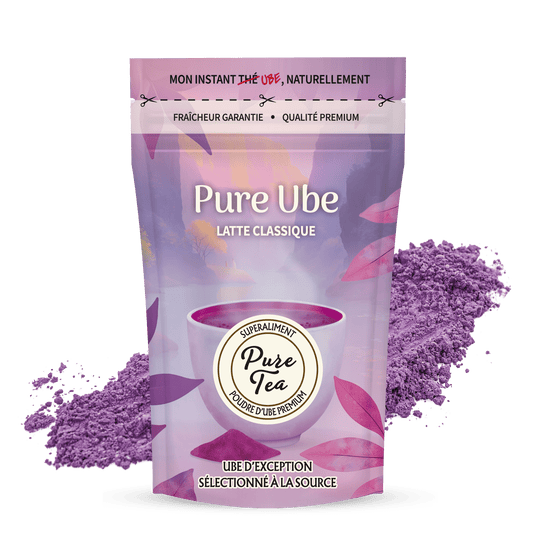
Ube is a purple yam from the Philippines. It’s the current star of the purple latte: its lavender color is natural, its flavor is sweet and vanilla-like (with a hint of sweet potato and hazelnut), and it is caffeine-free. It’s the most indulgent and the easiest to love of the three. Our ube powder is the perfect example; everything is explained in our ube latte guide.
2. Taro: the milder, grayer cousin
Taro is also a tuber, often confused with ube. But its flesh is actually white speckled with purple: the “taro latte” in bubble tea shops often owes its color to a little ube or food coloring. Its taste is more neutral, slightly nutty and starchy. Taro is also caffeine-free. Keep in mind: ube ≠ taro, even though they’re often mixed up.
3. Butterfly pea flower (blue matcha): the blue that turns purple
Butterfly pea flower (“blue matcha”) creates an intense blue latte… which turns purple as soon as you add a drop of lemon juice! It’s the most spectacular of the three for a real “wow” effect. Caffeine-free, with a very mild, neutral taste. We explain all the magic in our Blue Matcha article.
Quick comparison
- Color: ube = warm lavender · taro = pale grayish purple · blue matcha = blue→purple depending on acidity.
- Taste: ube = sweet, vanilla-like · taro = neutral, starchy · blue matcha = very mild, almost neutral.
- Caffeine: none of the three contains any.
- Visual effect: ube = the creamiest · blue matcha = the most spectacular.
Which one should you choose?
- For taste and indulgence → ube, without hesitation.
- For the bubble tea effect → taro (often paired with pearls).
- To impress everyone → butterfly pea flower and its color-changing effect.
How to make a purple latte at home
The base is always the same: whisk the powder (ube) or steep the flowers (butterfly pea) into a smooth mixture, add a light-colored milk (oat or coconut) that’s nicely frothed so the purple stands out, and serve hot or iced. For the perfect foam without a machine, see our dedicated guide. Tip: a very light milk = a much brighter purple.
Frequently asked questions
What is the difference between ube and taro?
Ube is a yam with naturally purple flesh, with a sweet, vanilla-like taste. Taro is a tuber with white flesh speckled with purple, with a more neutral, starchy taste. They’re often confused, but ube is clearly more purple and sweeter.
Does a purple latte contain caffeine?
No: whether it’s made with ube, taro, or butterfly pea flower, a purple latte is naturally caffeine-free. Perfect any time of day.
Why does my butterfly pea latte turn purple?
Butterfly pea flower contains pH-sensitive pigments: adding an acidic ingredient (lemon juice) makes the blue turn purple, then pink. It’s a natural and spectacular reaction.
How can I get a really vibrant purple?
Use a high-quality powder, add it generously, and choose a light milk (oat or coconut): dark or very creamy milks will soften the color.
Your turn
Ube for taste, taro for bubble tea, butterfly pea for the magic: the purple latte has many faces. The most indulgent remains ube — discover the Pure Ube range and make your signature purple latte.