Every year, the same signal: the leaves turn, the orange cups reappear, and the pumpkin spice latte takes its place back on the counter. Make one at home, though, and you discover something funny. This autumn drink doesn't actually need syrup, coffee, or even added sugar to taste the way we all know it. Five ingredients will do.
Here's what's really in a coffee shop PSL, what changes when you make your own, and the recipe for a velvety, spiced cup in three minutes.
Where does pumpkin spice actually come from?
Long before it was a drink, "pumpkin spice" was an American baking blend, used for decades to season pumpkin pie at Thanksgiving. The classic line-up: cinnamon, ginger, nutmeg, sometimes clove or allspice. Which means pumpkin spice contains no pumpkin at all. It's the blend that goes with the pumpkin.
When American coffee shops turned the pie into a beverage in the early 2000s, they kept the spices, added milk, an espresso shot… and a great deal of syrup. The pumpkin itself became optional. That's exactly where the commercial version and the homemade one part ways.
What's in a coffee shop PSL
Sugar, the main guest
This is the part that surprises people most. Depending on the chain, the size and the milk you choose, a shop-made pumpkin spice latte can come close to — or pass — 40 to 50 g of sugars in a large. That's roughly ten sugar cubes in a single cup. Figures vary from country to country and from season to season, and chains generally publish their nutrition tables: it's worth a look before you order.
That sugar doesn't come from the pumpkin. It comes from the flavoured syrup, which is the aromatic backbone of the drink: it delivers the spice flavour, the colour and the texture all at once.
Where did the pumpkin go?
In many commercial recipes, pumpkin shows up in very small amounts — sometimes as a concentrated purée, sometimes not at all, replaced by a flavouring. The result is pleasant, but it owes its character to the syrup rather than to the squash. A version that genuinely leads with pumpkin tastes different: rounder, faintly vegetal, less candy-shop.
The coffee, a detail that matters
A coffee shop PSL carries one or two espresso shots. Handy in the morning, less so at nine in the evening. A powder base made from fruit and vegetables is naturally caffeine-free: you can drink one at 9pm without thinking about it again at 2am. And if you do want the kick, nothing stops you adding an espresso on top. That's one of the quiet advantages of coffee-free lattes: you decide, cup by cup.
The five-ingredient version
Pumpkin, date, cinnamon, ginger, nutmeg
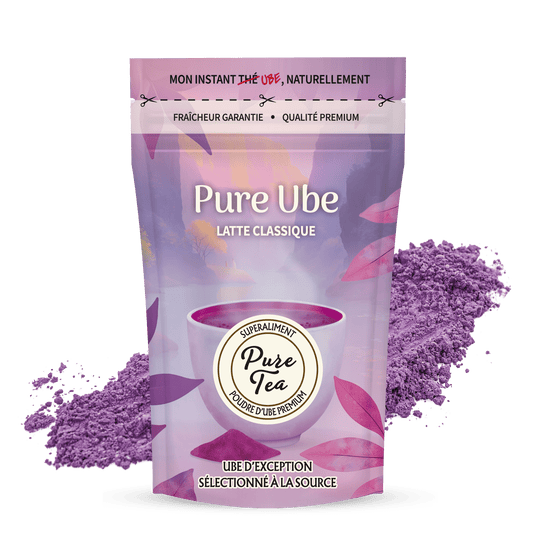
The Pure Tea Pumpkin Spice Latte fits on a list you can read out loud in one breath: pumpkin, date, cinnamon, ginger, nutmeg. That's it. No added sugar, no artificial flavouring, no colouring, no preservatives.
The date does the job the syrup does elsewhere: it sweetens naturally, brings fibre, and rounds off the edges of the squash. Cinnamon and nutmeg carry the autumn signature, ginger adds that warm little kick on the finish. And the orange colour? That's the pumpkin itself — beta-carotene, not a dye.
What that changes in the cup
In practice: roughly 11.61 kcal per 200 ml (based on 3 g of powder in water), a velvety texture that comes from the vegetable's own fibre rather than a thickener, and a spice note that builds gradually instead of flooding the first sip. The powder is vegan, gluten-free and made in France.
One note for anyone who needs it: the product is packed in a facility that also handles nuts, milk and gluten.
The homemade pumpkin spice latte
What you need
- 1 to 2 teaspoons of Pumpkin Spice Latte powder
- 150 to 200 ml of milk (dairy or plant-based)
- A splash of hot liquid to loosen the powder
- Optional: 1 espresso, a grating of nutmeg, a pinch of ground cinnamon
Step by step
- Loosen it first. Put the powder in the cup with just two or three tablespoons of hot liquid. Stir to a smooth paste, no lumps. Everyone skips this step, and it's the one that makes the difference.
- Heat the milk without boiling it. Aim for 65 to 70 °C at most. Any hotter and plant milk splits while the spices lose their edge. If the milk is trembling, it's already too hot.
- Top up and froth. Pour the milk onto the paste in a steady stream, whisking as you go. A handheld frother, a sealed jar shaken hard, or even a patient fork will all do the job.
- Finish. A dusting of cinnamon over the foam and you're done. Three minutes, start to finish.
The iced version, for early September
While the weather still holds, the iced version works beautifully. Loosen the powder in a little hot water first (essential — in cold liquid it stays grainy), let it cool for a minute, then pour over a tall glass of ice and top with cold milk. A shaker or a jar gives you a denser foam.
Which milk to choose
Pumpkin and spices get along with almost anything, but every milk shifts the balance:
- Oat: the crowd-pleaser, naturally sweet, froths beautifully. The default choice.
- Almond: lighter, lets the spices lead, froths less.
- Soy: the highest in protein, excellent foam stability, a more assertive flavour.
- Whole dairy milk: round and classic, closest to the coffee shop cup.
- Coconut: more tropical, worth it if you enjoy the contrast.
What does a cup cost?
A 50 g resealable pouch costs €9.90 and makes 8 to 10 cups at one teaspoon, or 5 to 7 at two. That works out at around €1 a cup at standard strength — and less again with the two-pouch pack, which is priced down. Set against a PSL bought over the counter, the difference pays for itself within a week of October.
And after the pumpkin?
Pumpkin spice opens the season; it doesn't close it. Once the Christmas markets go up, the Gingerbread Latte takes over with its nine ingredients: date, ginger, cinnamon, cardamom, coriander, clove, allspice, fennel and nutmeg. Spicier, more intense, unapologetically festive.
For anyone who wants the comfort without the seasonal label, Banana Speculoos works all year round — velvety banana and the eight spices of Belgian speculoos, essentially banana bread in a cup. And if you're already missing summer, Tropical Strawberry (strawberry, banana, mango, not even a date) keeps its coral-pink colour deep into November. The whole Fruity Latte range follows the same logic: fruit or vegetables in powder form, spices, and nothing else.
Frequently asked questions
Does a pumpkin spice latte actually contain pumpkin?
It depends entirely on the recipe. In many commercial versions pumpkin is a minor ingredient or absent altogether, replaced by a flavoured syrup. In a pumpkin-based powder it's the lead ingredient — it's what gives the drink its colour and its texture.
Can you make a pumpkin spice latte with no added sugar?
Yes. Swap the syrup for a sweetness that already exists in a fruit, such as date. The result is less sweet than a coffee shop PSL but noticeably more spiced, which more than makes up for it.
Does a pumpkin spice latte contain caffeine?
The coffee shop one does: it's built on one or two espresso shots. A version made from pumpkin and spice powder contains none, which makes it suitable for the evening. You can always add an espresso if you want one.
Why is my powder going lumpy?
Because it met all the liquid at once. Always loosen the powder with a small splash of hot liquid first, until it's a smooth paste, then top up. That's the only rule that matters.
Can you bake with pumpkin spice powder?
Absolutely: porridge, pancakes, muffins, cheesecake, flavoured whipped cream, cupcake frosting. Use one to two teaspoons per single portion and taste before adding more — spices intensify as they cook.