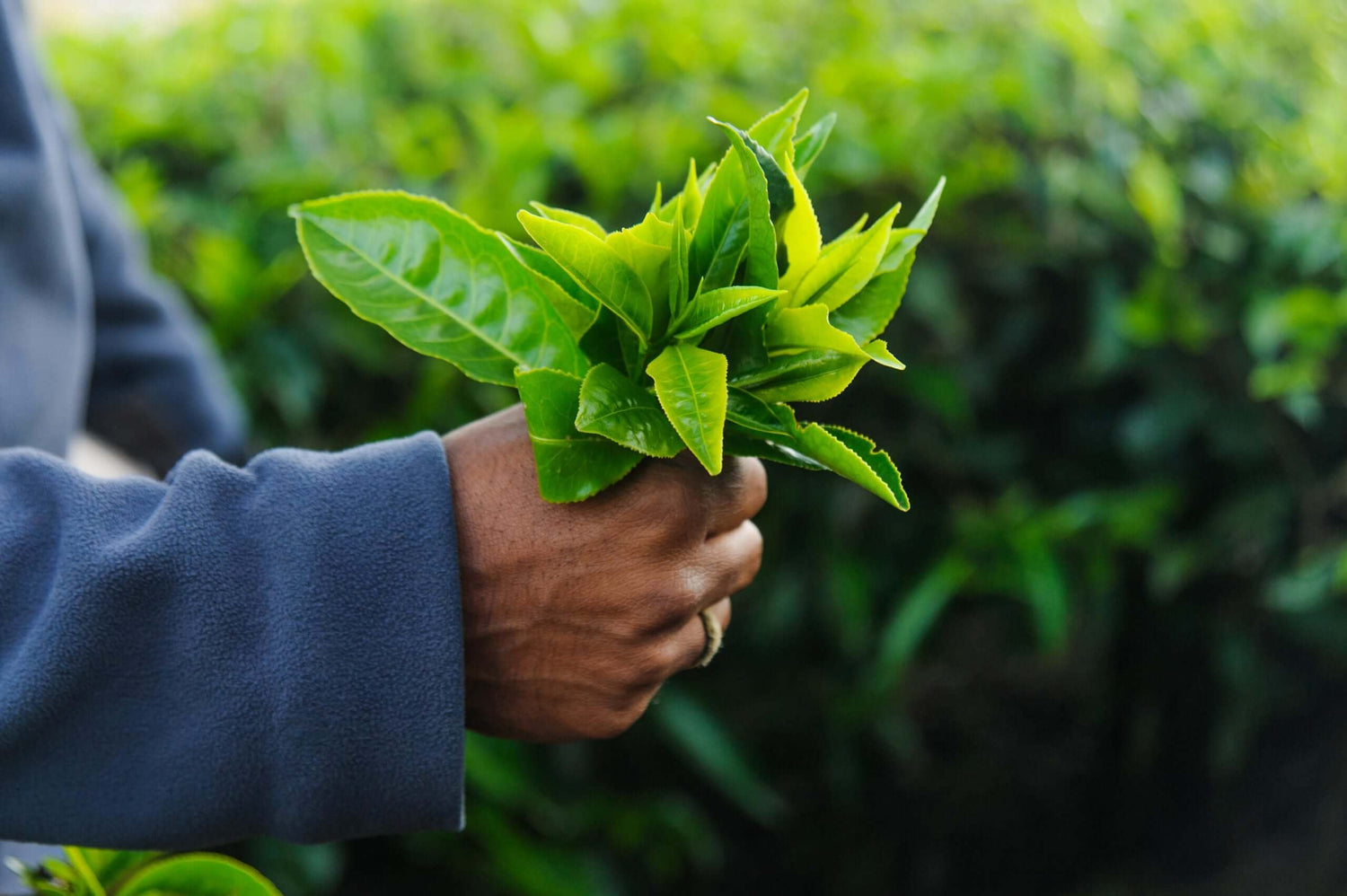
Far more than a drink, black tea is a marker of civilization. Once a simple leaf plucked from a mountain shrub, over the centuries it has become the beating heart of countless cultures—a symbol of refinement, awakening, and social connection. Drinking black tea means sharing a millennia-old legacy, and also agreeing to slow down so you can feel more. But where does it come from exactly? And how has this dark, deep brew conquered the world?
I. China: where it all began
The story of tea begins in the misty mountains of Yunnan and Fujian, in China. This country—undisputed birthplace of tea—initially made no clear distinction between green, oolong, or black. Everything depended on the timing of the harvest, the withering method, the exposure to air, and the drying process.
The black tea, called "hong cha" in China (meaning literally "red tea", referring to the color of the infusion), emerges as a late innovation in the history of Chinese tea. It was born from an accident. Legend has it that in the 16th century, in the village of Tong Mu, an imperial army interrupted the traditional drying of a green tea. To save the harvest, the villagers decided to smoke the leaves over pine-wood heat to speed up the process. The result was a tea with powerful, woody, almost caramelized notes: Lapsang Souchong was born. It later became one of the most appreciated teas among European aristocracies.
But behind this anecdote lies a broader reality: China, vast and blessed with varied climates, has always known how to adapt its processing techniques to commercial needs and people’s tastes. Keemun, produced in Anhui province in the 19th century, illustrates this drive for elegance and complexity: less smoked, more floral, almost chocolatey—created specifically to appeal to Western markets, it became highly prized in English blends.
Drinking Chinese black tea is finding a subtle alliance between power and refinement—an ember-and-fog trace, a memory of ancient forests and millennia-old gestures.
II. India: an empire forged by colonization
India did not know tea before the arrival of the British. Or at least, it wasn’t cultivating it on a large scale. It was the British colonists who, in the 19th century, decided to introduce tea cultivation to reduce their dependence on China, with whom trade relations were becoming strained—especially after the Opium Wars.
In 1823, a British major happened upon a wild tea tree in the forests of Assam, in the northeast of India. Very quickly, industrial plantations sprang up, maintained by an exploited local workforce, and Indian tea became a tool of colonial power. But from this complex story would emerge a distinctly Indian identity of black tea.
Assam tea, robust and full-bodied, with an amber liquor, becomes the base of the famous chai, steeped for a long time with milk, sugar, and spices (cardamom, cinnamon, ginger…). It embodies India’s ability to reinterpret foreign legacies and turn them into powerful, unique cultural elements—all on its own.
Further north, in the foothills of the Himalayas, another gem takes shape: Darjeeling. Grown at altitude in near-permanent mists, this black tea is actually a hybrid—often semi-oxidized—with muscat-like, floral, delicate notes. Each harvest—or "flush"—gives a different tea, like a great cru. Darjeeling is so prestigious that it is protected by a protected designation of origin.
Thus, despite its beginnings, India became one of the world’s largest black tea producers by turning an imperial will into a tradition deeply rooted in its social and taste fabric.
III. Sri Lanka: the rebirth of Ceylon
Once a British colony as well, Sri Lanka—then called Ceylon—was converted to tea cultivation under astonishing circumstances. At the end of the 19th century, a disease devastated the island’s coffee plantations. In just a few years, the entire agricultural economic system collapsed. To survive, British colonists then bet on tea. A winning wager: the mountainous soil, the humid climate, and varying altitudes offer ideal conditions.
Ceylon tea develops a distinct aromatic identity: bright, clear, citrusy, sometimes almost minty depending on the region. In Nuwara Eliya, you’ll find fine, floral teas, often hand-picked by Tamil women. In the Uva region, teas are more powerful, with a light bitterness that makes them perfect for English blends.
But what makes Ceylon black tea so unique may be its ability to resist time. Less sensitive to oxidation, easy to brew, it quickly becomes the reference in European tea rooms and in the 20th-century industrial tea bag market.
Even today, even if other countries have emerged on the tea scene (Kenya, Turkey, Vietnam…), Sri Lanka remains a giant of the orthodox tradition, where each leaf is hand-rolled, sorted, and dried with precision.
IV. Black tea: a bridge between worlds
From Taoist China to colonial India, from the mountainous Sri Lanka to Western tables, black tea is a meeting point between cultures—a liquid mirror that reflects history, geopolitics, tastes, and identities.
It is at once the tea of the English aristocracy, the fuel of industrial revolutions, the companion of Russian writers in their snowy dachas, and a spiritual drink in Chinese temples. In London, you drink it with milk; in Tibet, with butter; in Moscow, with lemon.
And everywhere, it connects.
V. How to enjoy it today?
If black tea has crossed the ages, it deserves to be rediscovered today as well. To reveal all its richness:
-
Use water that’s low in minerals, at 92–95°C
-
Steep the leaves for 3 to 5 minutes, depending on the variety
-
Take the time to taste it plain, before adding milk or sugar
-
Pair it with savory or sweet foods: dark chocolate, aged cheese, buttered toast...
An elixir of memory
Each cup of black tea is a fragment of history. It carries the scents of a Chinese forest, the cries of a colonial port, the rustle of dawn tea-picking, and the silence of a monastery. Becoming aware of that is turning an everyday gesture into a ritual of memory. Drinking black tea isn’t just about warming up. It’s opening yourself to the world’s history—through your senses.