When you fancy a warm, roasted drink but caffeine isn't welcome — late in the day, during pregnancy, or if coffee simply doesn't agree with you — there's an old and surprisingly tasty alternative: barley coffee. Made from roasted, brewed barley grains, it delivers the rounded bitterness and toasty notes we love about coffee, without a single drop of caffeine. Here's everything you need to know to embrace it, brew it properly, and turn it into a creamy, comforting barley latte.
What is barley coffee?
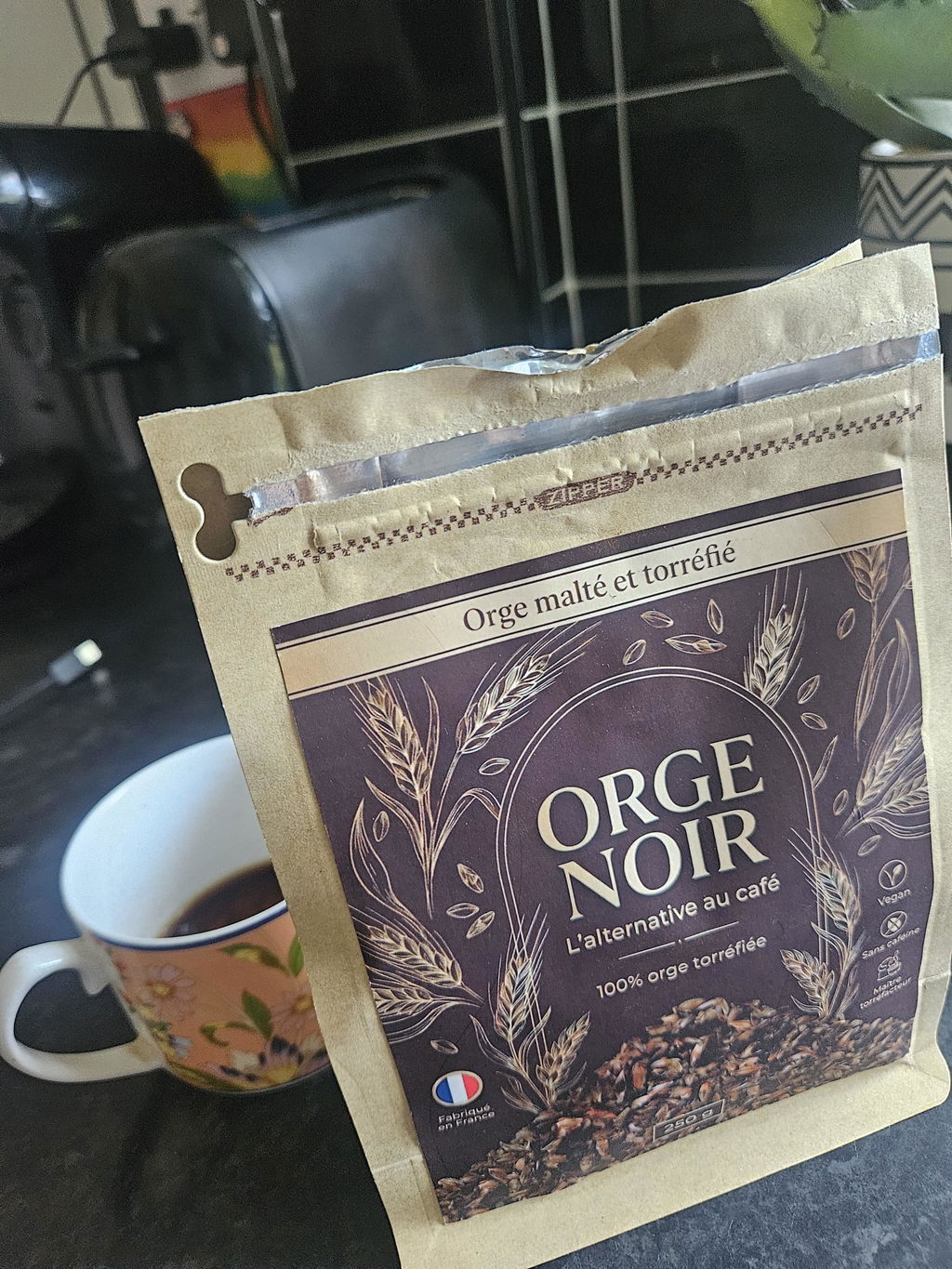
Barley coffee isn't coffee at all: it's a drink made from roasted barley. The grains are toasted until deep brown, then ground and brewed exactly as you would coffee. The result looks much like a long espresso, with a brown body and a light crema, but the aroma is softer, gently caramelised and free of the sometimes sharp acidity of coffee.
From roasted barley to your cup
Roasting is the key step: it develops those toasty aromas through the Maillard reaction, just as it does for coffee beans or bread. Depending on how dark the roast is, the drink will be softer and maltier (light roast) or fuller and more bitter (dark roast). Barley coffee comes in three forms: whole grains to grind, ready-ground, or an instant soluble version to stir into hot water.
Caffè d'orzo, an Italian everyday habit
It may sound exotic, but it's actually an everyday classic in Italy, where caffè d'orzo is ordered at the counter like an espresso and even served to children. You'll also find it across Eastern Europe and in Japan, where cold-brewed roasted barley (mugicha) is the summer drink of choice. Proof that toasted barley travels across cultures as a natural coffee alternative.
The benefits of barley coffee
Beyond its taste, barley coffee appeals as much for what it lacks as for what it brings.
Truly zero caffeine
This is its main draw: barley naturally contains no caffeine. So you can drink it in the evening without worrying about your sleep, share it with the whole family, or turn to it during pregnancy or breastfeeding (medical advice is always recommended in these situations). It's a way to keep the ritual of a warm cup without the stimulating effects or the jitters caffeine causes in sensitive people.
Gentle on digestion
Where coffee can be acidic and irritating for sensitive stomachs, roasted barley is far gentler. Many people who have had to give up coffee because of reflux or acidity find a comparable pleasure in barley coffee, without the discomfort. Its malty flavour is often satisfying on its own, which helps you avoid adding too much sugar.
Fibre and antioxidants
Barley is a cereal rich in soluble fibre and provides antioxidant compounds, some of which form during roasting. While the brew obviously doesn't concentrate all the nutrients of the whole grain, it remains a drink with no significant calories (as long as you take it plain), making it a light companion through the day.
An important note about gluten
One thing not to overlook: barley contains gluten. Barley coffee is therefore not suitable for people with coeliac disease or a gluten intolerance. If that's you, reach instead for other comforting caffeine-free drinks that are naturally gluten-free, such as rooibos or a spiced infusion.
How to make barley coffee
The method depends on the form you've bought. In every case, the goal is to draw out the toasty aromas without pushing the bitterness too far.
In a saucepan, with ground barley
Use roughly one tablespoon of ground barley per 200 ml of water. Bring the water to a gentle simmer, add the barley, let it steep for 3 to 5 minutes over low heat, then strain. The longer it steeps, the fuller the drink. This is the method truest to the traditional taste.
With a coffee maker or machine
Finely ground barley works in a filter coffee maker, a stovetop moka pot or even some machines, exactly like ground coffee. Adjust the dose to taste, starting light and tweaking from there. Rinse your equipment well afterwards, as barley leaves a malty residue.
The instant version
The quickest form: one to two teaspoons of soluble barley in a cup of hot (not boiling) water, give it a stir and it's ready. Ideal at the office or in the evening, with no filter and nothing to clean.
Our recipe: a creamy barley latte
To turn a simple cup of barley into a cosy treat, nothing beats a latte. The malty sweetness of barley pairs beautifully with frothy plant-based milk and a hint of vanilla or cinnamon.
For 1 large cup — 5 minutes
- 200 ml hot barley coffee (saucepan or instant)
- 120 ml oat milk (or almond, soya)
- 1 teaspoon maple syrup or honey (optional)
- 1 pinch of cinnamon or a few drops of vanilla extract
Method
- Brew your barley coffee piping hot and pour it into a large cup.
- Warm the oat milk without boiling it, then froth it (whisk, handheld frother or a jar shaken vigorously).
- Add the maple syrup and vanilla (or cinnamon) straight into the cup and stir.
- Pour the frothed milk over the top, dust with a veil of cinnamon and enjoy straight away.
Tip: for a perfect iced version in summer, let the barley coffee cool, pour it over ice and add cold frothed milk. If you like frothing your milk at home, our methods for frothing a latte without a machine work just as well here.
Varying your caffeine-free comforts
Barley coffee earns its place in a routine of gentle drinks, but it loves company. For a roasted bitterness, keep the barley; for other kinds of caffeine-free comfort, several Pure Tea options slip naturally into the day.
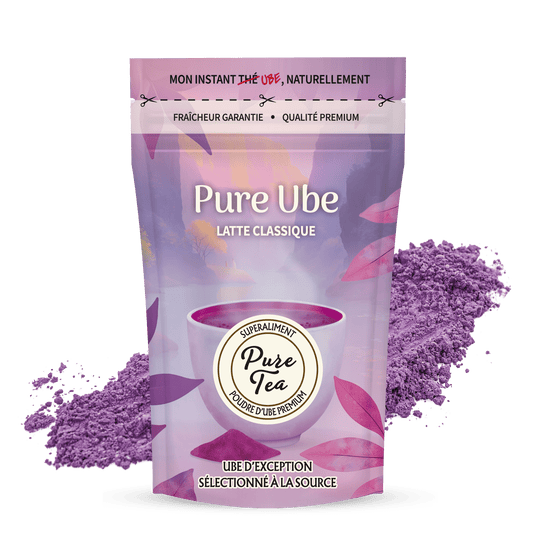
On the caffeine-free infusion side, rooibos offers a naturally sweet roundness and is gluten-free, perfect as an alternative when barley isn't an option. For a spiced, enveloping cup, our Chai Herbal Infusion brings cardamom, ginger and cinnamon; you can even build on it with our homemade chai latte recipe. And if you fancy a colourful, indulgent latte, the Pure Ube Latte made from purple Philippine yam is also caffeine-free. To explore every avenue, our guide to coffee-free lattes rounds up seven comforting alternatives.
Frequently asked questions about barley coffee
Does barley coffee contain caffeine?
No. Roasted barley naturally contains no caffeine, which makes barley coffee ideal in the evening or for people who are sensitive to stimulants.
What does barley coffee taste like?
It recalls a soft, roasted coffee, with malty, gently caramelised notes, but without the acidity or the aggressive bitterness of regular coffee.
Is barley coffee gluten-free?
No. Barley is a cereal that contains gluten. Barley coffee is therefore not suitable for people with coeliac disease or a gluten intolerance; rooibos is then a better caffeine-free alternative.
Can you drink barley coffee during pregnancy?
Being naturally caffeine-free, barley coffee is often chosen during pregnancy in place of coffee. As with any drink, medical advice remains recommended depending on your situation.
How do you make a barley coffee latte?
Brew 200 ml of hot barley coffee, add 120 ml of frothed plant-based milk, a touch of maple syrup and a pinch of cinnamon or vanilla. It's done in five minutes.